
Quieter audio for sensory overload, misophonia and hyperacusis
Name the sounds you want left out, preview at a low volume, and stop when something bothers you; care decisions belong with an audiologist or clinician.
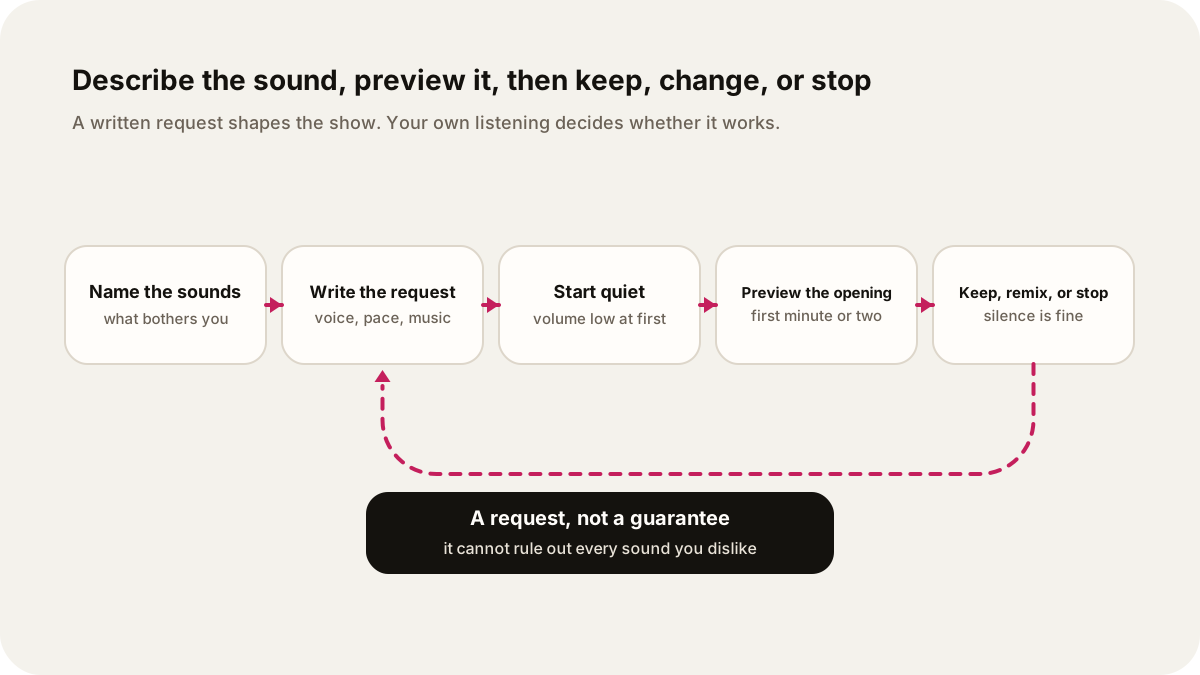
If certain sounds overwhelm or bother you, describe the sound you want rather than the mood. "Calm" can still mean a soft music bed, two hosts laughing, or a narrator with audible breaths. A request that names one narrator, an even pace, no background music or sound effects, and a short length gives you something specific to check. Start at a low volume, preview the opening, and stop or change it if anything bothers you.
It also helps to know which experience you are describing. Misophonia, hyperacusis, and sensory overload are different things, and research on all of them is still developing. An audio show can be a quieter choice for an evening. It is not a treatment, and decisions about care belong with an audiologist, GP, or other clinician.
Misophonia, hyperacusis, and sensory overload are not the same
Misophonia has a consensus definition, published in 2022 by a 15-member international committee that used a modified Delphi process to reach agreement (Swedo et al., 2022). It describes misophonia as a disorder of decreased tolerance to specific sounds or stimuli associated with those sounds. Triggers named in the paper include chewing, slurping, breathing, sniffing, pen clicking, typing, and tapping. The committee notes that triggers are often repetitive and mostly, though not only, made by other people, that the response does not seem to depend on loudness, and that sounds a person makes themselves typically do not provoke the same reaction. Symptoms usually begin in childhood or early adolescence.
Hyperacusis is about loudness. The NHS describes it as everyday sounds seeming much louder than they should, sometimes to the point of pain. The American Speech-Language-Hearing Association's hyperacusis leaflet adds that it is not ordinary discomfort around loud sounds, that many people with hyperacusis have normal hearing, and that it often comes with tinnitus. The NHS page also names phonophobia, where sounds cause anxiety.
The difference matters for listening. With misophonia, a quiet lip sound can matter more than overall volume; with hyperacusis, the overall level is the problem. The two can also occur together, and the consensus paper notes that reactions can look similar or even identical, so an audiologist's view beats guessing.
Sensory overload is a broader description. The National Autistic Society describes it as taking in more sensory information than a person can process. For people who are over-sensitive to sound, the charity says sounds can seem louder and sudden noises more distressing than they are for others.
What research says about exhaustion after a social day
Ordinary tiredness after a long day of meetings or a crowded event is common, and choosing something easy to hear afterwards needs no diagnosis. Researchers also use a narrower term. A 2020 study defined autistic burnout as long-term exhaustion, loss of function, and reduced tolerance to stimulus, typically lasting three months or more (Raymaker et al., 2020). Masking, meaning hiding autistic traits to meet social expectations, was the most prominent stressor participants described.
That study was small and exploratory: 19 interviews with autistic adults plus a review of public online writing. Its authors call for wider research. It does not show that any kind of audio prevents or relieves burnout.
Where the evidence stops
The research above defines these experiences. It does not test whether a calm podcast or single-narrator show helps with any of them.
Three points are worth knowing before you set your own listening rules:
- Hearing protection all day can backfire for hyperacusis. The NHS advises against wearing earplugs or ear muffs all the time, because that could make you more sensitive to noise. ASHA makes a similar point: the world can seem louder once the plugs come out.
- Structured sound programs are clinical work. ASHA describes sound desensitization as listening to barely audible noise under a specialist's guidance over months. It also states that auditory integration therapy lacks enough evidence to support its use outside research. A show you pick for an evening is not one of these programs.
- When to get help. The NHS suggests seeing a GP if everyday noises feel too loud or painful. For anxiety that does not go away, the National Institute of Mental Health lists ways to find care. A familiar voice may be pleasant, but it is not anxiety treatment.
Practical choices: describe the sound, not the feeling
The advice in this section is about preference and comfort, not research findings. Name each part of the sound you want changed.
- Voice. Ask for one narrator rather than hosts in conversation. A synthetic voice is still a voice, so no request can promise the absence of breaths, lip sounds, or sharp consonants. You can ask for an even delivery and switch voices if one bothers you.
- Pace and structure. Ask for an unhurried pace, short sections, and few scene changes. If surprises bother you, ask the narrator to say what each part will cover before it starts.
- Music and effects. Say "no background music, no sound effects, no musical transitions." Leaving music out of the request is not the same as asking for none.
- Subject. Pick a topic with little drama. Ask for the geology of a coastline rather than a shipwreck story, or how an object is made rather than a feud between its makers.
- Length. A shorter episode is easier to preview and easier to abandon.
Colored noise is a separate question. If you are weighing white, pink, or brown noise instead of speech, see brown noise versus pink noise, which covers how limited that evidence is.
Volume, previewing, and stopping
Start quieter than you think you need and raise the level slowly. The NIDCD says sounds at or below 70 A-weighted decibels are unlikely to cause hearing loss even after long exposure, while long or repeated exposure at 85 or above can cause it. It lists music through headphones at maximum volume at 94 to 110 dBA. Those figures concern hearing damage, not comfort: a safe level can still be too much with hyperacusis. On iPhone, Apple's Reduce Loud Audio setting lowers headphone volume when it goes past a decibel level you choose.
The National Autistic Society lists ear defenders and noise-cancelling headphones among tools for sound sensitivity. If you have hyperacusis, ask your audiologist how that fits with the NHS caution about constant protection.
Preview a new episode before it becomes part of a routine. Listen to the first minute or two somewhere you can stop at once. If it bothers you, stop. Pushing through to build tolerance is a decision for a clinician, not something a listening plan should ask of you. Silence is always available.
After a long social day, a recording asks nothing back. You can pause it, leave it half-finished, or turn it off. For a few quiet minutes midday, see short audio breaks.
Make a show around it
Here is an example request for someone who finds mouth sounds and background music hard to listen to. It is a request you could write, not a description of what an episode will contain.
Make a 10-minute show about how dry stone walls are built in the Yorkshire Dales. Use one narrator with a low, even delivery and an unhurried pace. No background music, no sound effects, no musical intro or transitions, and no second voice. Before each part, say in one sentence what it will cover. Keep the history calm and focus on the stones, the tools, and the hillsides.
In Lissin you choose the subject, the voice, the pacing, and the length, then type what you want changed if the result does not fit.
A worked example: previewing that request
Suppose the episode is ready.
- Set the level first. Turn the volume down before pressing play, then raise it only until the narrator is clear.
- Listen to the first 60 to 90 seconds with one question in mind: is there anything I asked to avoid? Check the opening for a music sting, listen for audible breaths or lip sounds between sentences, and notice whether a second voice appears.
- Decide straight away. If a music bed appears, remix with "remove all music, including the intro." If the narrator's breaths stand out, ask for a different voice. If the pace feels rushed, ask for a slower one. If the subject drifts into drama, ask to stay with the stones and tools.
- Stop if it still bothers you. A second remix is optional, not a duty.
- Keep what works. When a version suits you, download it for offline listening and reuse the same wording for the next topic. Each new episode still needs its own preview.
A request that suits you can also become a recurring show, returning daily or weekly in the same presentation.
Sources
- Swedo et al. (2022), "Consensus Definition of Misophonia: A Delphi Study," Frontiers in Neuroscience: the consensus definition, the committee and Delphi method, common triggers, the role of loudness and self-made sounds, age of onset, and overlap with hyperacusis.
- NHS: Hyperacusis: definition, related sensitivities including misophonia and phonophobia, when to see a GP, treatments, and the caution about constant earplug use.
- ASHA Audiology Information Series: Hyperacusis: hyperacusis compared with discomfort at loud sounds, normal hearing and tinnitus, earplug effects, sound desensitization, and ASHA's position on auditory integration therapy.
- National Autistic Society: Autism and sensory processing: description of sensory overload, sound sensitivity, and support such as ear defenders and quieter spaces.
- Raymaker et al. (2020), "Defining Autistic Burnout," Autism in Adulthood: definition of autistic burnout, the role of masking, study design, and limitations.
- NIDCD: Noise-Induced Hearing Loss: 70 and 85 dBA thresholds and headphone volume at maximum.
- Apple Support: Headphone notifications on your iPhone, iPad, or Apple Watch: the Reduce Loud Audio setting.
- National Institute of Mental Health: Anxiety disorders: what anxiety disorders are and where to find help.