
Personalized bedtime stories or familiar fiction: choosing wind-down audio
An existing recording offers familiarity; a personal brief offers control. Neither choice guarantees better sleep.
A wind-down story can be familiar fiction, a new story, or a reflection built from context you choose to share. Personalization lets you choose the subject and delivery. It does not establish that the result will help you sleep better than an existing recording.
Start with the choice you can actually make: do you want to revisit something familiar, spend time in an imagined setting, or reflect on part of your day? The answer can change from one evening to the next.
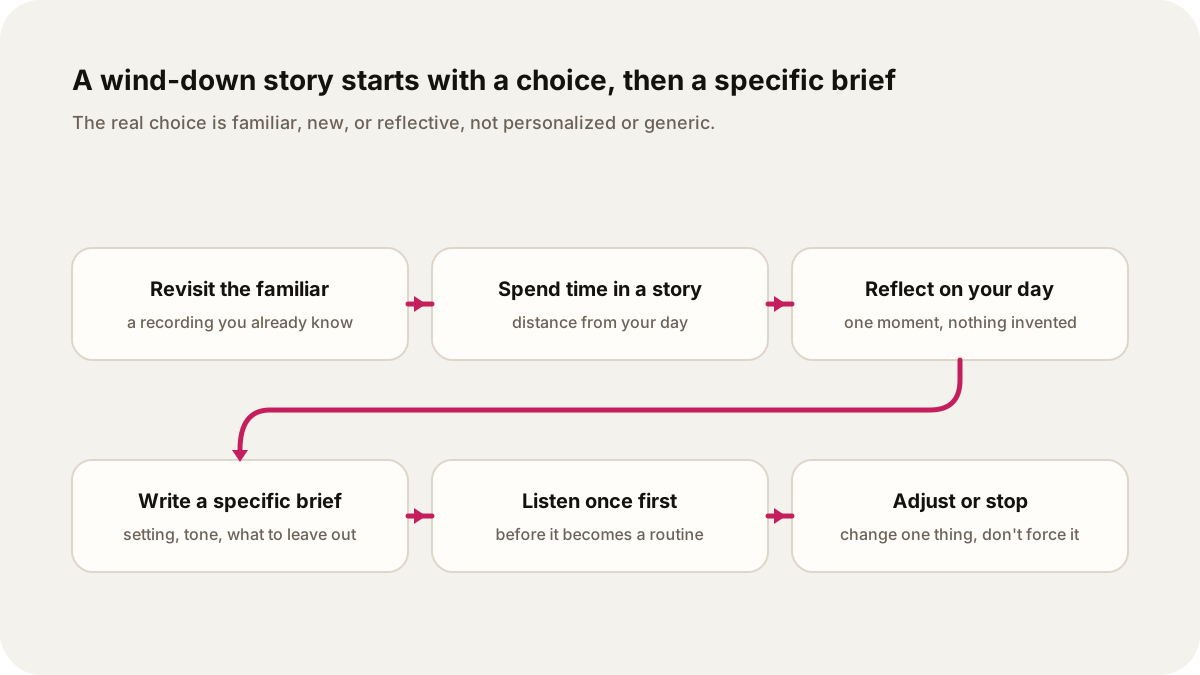
Original illustration: Lissin Editorial.
Adult sleep stories already exist
Narrated bedtime audio is not only a children's category. Calm offers bedtime stories for adults, alongside other sleep-oriented audio. Its story catalog documentation includes fiction, nature, and a separate children's category.
An existing recording has a practical advantage: you can hear the narrator, know its length, and return to exactly the same story. If you already like a particular recording, you do not need a newly generated one each night.
A personal story offers different control. You can name the setting, tone, subject, and things you want left out. That may suit someone who wants a quiet account of a familiar interest rather than a preset catalog. It also requires choosing a brief and deciding whether the resulting audio suits you.
Familiar does not always mean restful
A recap of your day uses people and events you already know. That alone does not prove it asks less of your attention or helps you disengage. A meeting you would rather forget could become the center of the narration. A pleasant moment might be something you enjoy hearing again.
Fiction offers distance from your own day, but a mystery or cliffhanger may leave you wanting to hear what happens next. Familiar fiction, a descriptive scene, and a personal reflection are different options; “personalized” versus “generic” does not capture all of those choices.
The sources cited here do not establish that a personalized adult day recap outperforms a prerecorded story for sleep. A children's app study would not settle that comparison either, and investor interest in a product would provide no evidence of a sleep benefit.
Two briefs with different jobs
Choose the details you want to share. A story can be personal without using sensitive information, and a style you like is not a promise of better sleep.
For distance from the day:
Write a short, calm story set in a small bookshop after closing. Keep the events low-stakes, with no mystery, danger, cliffhanger, or surprise ending. Use an unhurried narrator and finish the story within this episode.
For a gentle reflection:
Create a brief reflection on one ordinary moment I enjoyed today: taking a walk after lunch. Stay with the details I provide. Do not invent conversations, interpret my emotions, or turn it into advice. Use a calm, conversational voice.
For a personal reflection, give only the context you want used. You can describe an activity without names, locations, messages, or a full account of your day. If you want invention, choose a fictional story and make that clear. If you want a recap, ask it to stay within the facts you supplied and check the result for additions.
How a brief becomes a personal audio show explains the difference between choosing a subject, setting an editorial direction, and turning it into narration.
Judge the recording by your experience
Listen once before making a new recording part of a routine. Check whether the voice, pacing, background sound, and ending suit what you wanted. A brief can request an unhurried delivery; you still need to hear whether the output delivers it.
You might prefer a familiar recording on one evening and a newly chosen subject on another. Notice whether you want to keep following the plot, whether personal material brings you back to a stressful event, or whether the voice itself is irritating. Change that specific element or stop listening. You do not need to treat a preference comparison as proof of improved sleep.
You can also use a calm story earlier in the evening, without asking it to help you fall asleep. Choosing audio for the time you have applies the same practical check to other listening occasions.
Narration, a soundscape, or a timer
A story and a soundscape do different jobs. Narration gives you words to follow: a place, a small plot, or an explanation. Rain, wind, or a fan has no plot at all. The sources cited here do not show that either one helps you sleep better than the other, so treat them as two things you might want to hear and choose between them on the night.
If you notice you are waiting to hear what happens next, ask for a descriptive scene instead of a story with events, or switch to sound without words. A personal show is spoken audio. If you want rain or wind, choose a soundscape separately rather than expecting a story brief to turn into one partway through.
Decide how the listening should end, too. An episode stops when its audio ends. A timer stops playback after the interval you set, whether or not the story has finished, and asking for a 15-minute episode does not set one. On iPhone, Apple's Clock guide describes a timer that stops audio or video: set a custom timer, tap When Timer Ends, then choose Stop Playing at the bottom of the list of sounds. Pausing or changing playback speed changes how much of the episode that timer covers.
If you would rather not have audio running into the night, a short episode with a clear ending, or a timer, gives the listen a stopping point. The CDC's list of sleep habits includes keeping the bedroom quiet and turning off electronic devices at least 30 minutes before bedtime. If you follow that advice, place the story earlier in your wind-down instead of treating it as something to fall asleep to.
Creating or changing the story in Lissin
In Lissin, choose the story, voice, and length. Make one episode first, hear how it sounds, and change the direction before deciding whether you want a recurring show.
If the result is too dramatic, a useful remix request is specific: “Keep the setting and basic events, remove the suspense, and use a quieter delivery.” A personal recap may need a different correction: “Remove the invented conversation and use only the moment I described.” These are example instructions, not a claim that a particular output has been generated or reviewed.
Choose an existing recording when you want something you already know. Choose a personal brief when the control over subject or delivery is the reason you want to listen.
Sources
- Calm, Sleep: adult bedtime-story category; cited for product availability, not proof of health outcomes.
- Calm Help Center, Sleep Stories catalog: story categories and playback information.
- Lissin for iPhone.
- Apple Support, "Set timers in Clock on iPhone": steps for a timer that stops audio or video playback.
- CDC, "About Sleep": public sleep-habit guidance, including a quiet bedroom and turning off devices at least 30 minutes before bedtime.
- American Academy of Sleep Medicine (2021), "Clinical Practice Guideline for the Treatment of Intrinsic Sleep-Onset Insomnia": clinical review of stimulus control and cognitive distraction from nocturnal rumination.
- Morin, C. M., et al. (2006), "Psychological and behavioral treatment of insomnia: an update of the recent evidence": clinical evaluation of pre-sleep cognitive de-arousal protocols.