
Turn a job description into a personal audio brief
Keep the work, requirements, useful extras, and unanswered questions separate before you listen to a job description.
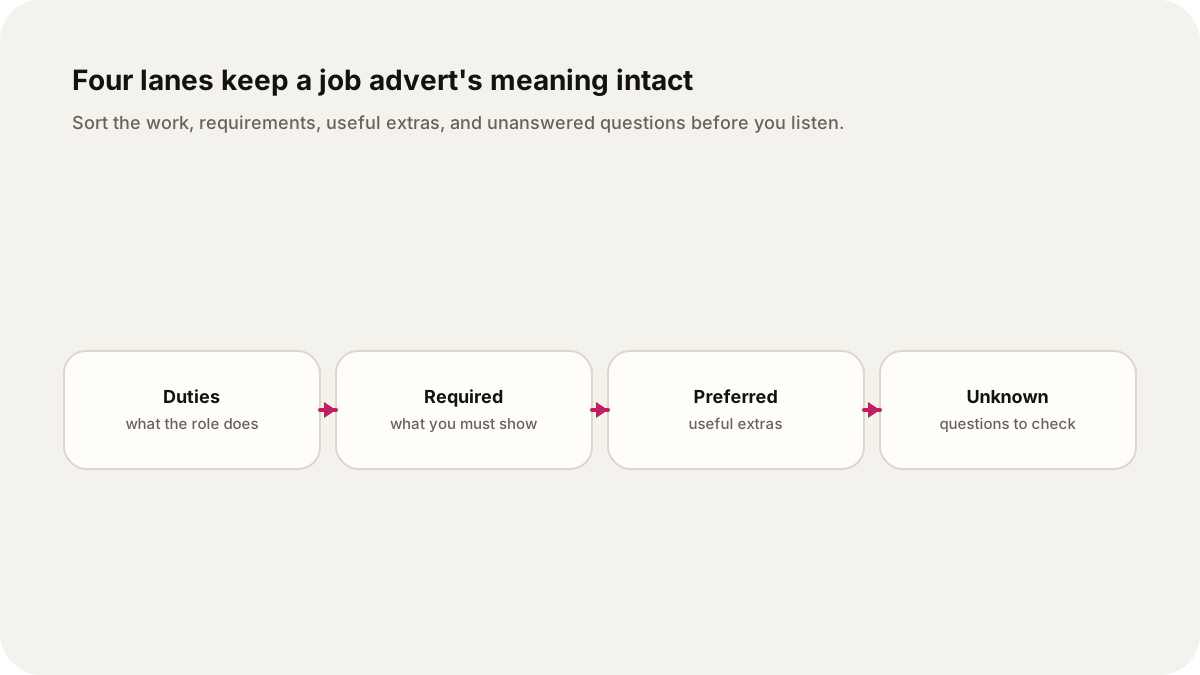
A job description can answer four questions. What would you do? What must you already bring? What would help your application? What does the advert leave unclear? If these answers blur together, a spoken summary can change the meaning of the posting.
Before you ask for audio, sort the job description into four lanes. Keep the employer's wording beside your notes.
Start with the question you need answered
Do not begin with “summarize this job description.” Choose the question you want answered. For example: “What would I do in this role? Which qualifications must I show? Which are useful extras? What should I check before I apply?”
Add the role title, country or hiring system, closing date if given, and source URL. This context matters because public-sector adverts use different labels. USAJOBS separates duties, requirements, qualifications, evaluation, and required documents. Its guidance says an agency uses the resume to check the qualifications in the announcement.
The USAJOBS resume guidance is a useful check for a US federal posting. For other systems, keep the advert's own terms.
Put the work in the duties lane
The duties lane describes the work. Pull out verbs such as “coordinate,” “write,” “analyse,” “manage,” or “advise.” Keep the object and setting with each verb. “Manage projects” is thin. “Manage projects across partner teams” tells the listener more.
Keep these details here too: team, location, manager, travel, shifts, contract type, and salary range. They describe the job. They do not prove that a candidate is eligible or suitable.
Do not turn “produce briefings for senior leaders” into “lead strategy” unless the source says so.
Separate required from preferred
Check required qualifications first. They may include education, experience, a licence, language ability, security conditions, or a named assessment. Copy the exact words. Note how the posting asks candidates to show them.
Preferred qualifications can help, but they are not automatic requirements. UK Civil Service guidance uses “essential” and “desirable” criteria. It recommends looking at desirable criteria after essential criteria. It also says assessment should use the criteria in the advert. See the Civil Service Commission guidance.
Australia's APS often asks for a CV plus a pitch or answers to selection criteria. The APS application guide says to use relevant examples and follow any word limit. Keep “preferred” and “required” separate. Read both.
Canada's federal system uses “essential qualifications” and “asset qualifications.” The GC Jobs application guide says applicants should have all essential qualifications. Asset qualifications are helpful, but not essential. For any role, follow that role's own posting.
Keep unknowns audible
Unknown means the posting does not answer the question. It does not mean “probably yes” or “probably no.” Mark gaps such as the word limit, interview format, work location, assessment date, team size, or whether a qualification can be gained after appointment.
Ask the audio to read unknowns as questions. This gives you a follow-up list without inventing an employer policy. Do not add a visa conclusion, hiring prediction, or claim that an application will succeed. A job description cannot establish those things.
A worked example from a hypothetical advert
This is an invented job example for this article. It is outside any copyable application request. Imagine a posting titled “Programme Coordinator.” It says the person will coordinate partner meetings, maintain a project tracker, and prepare monthly updates. It requires two years of project support experience and strong written communication. It lists experience with a shared planning tool as preferred. It does not state the team size, interview format, or travel needs.
The four lanes would read:
- Duties: coordinate partner meetings, maintain the tracker, prepare monthly updates.
- Required: two years of project support experience; strong written communication.
- Preferred: experience with a shared planning tool.
- Unknown: team size, interview format, travel expectations.
The listener's request could be: “Make a six-minute personal audio brief from this job description. Start with the duties. Separate required and preferred qualifications. End with unknowns as questions I should check in the advert or with the listed contact. Quote key qualification wording. Do not infer eligibility, employer policy, salary, visa status, or hiring outcome. Name the posting and source URL at the end.”
Keep the source beside the brief
Lissin is built around a listener's question. You choose what you want to hear, add the source material, and ask for a personal show shaped around that question. A job-description brief can be short, practical, and source-linked. It remains an aid to reading the advert. It is not an application, recruiter, or decision-maker.
Save the original posting and access date beside the audio. Job adverts can change or close. Make a labelled revision when a qualification or deadline changes.
Sources
- USAJOBS, How do I write a resume for a federal job?
- UK Civil Service Commission, Recruitment FAQs and Guidance
- Australian Public Service Commission, Applying for an APS job
- Government of Canada, Applying for government jobs
- Lissin on the App Store
- Turn a device specification into a personal audio brief
- Turn meeting notes into a personal audio brief