
Podcast consumption in 2026: the audio, video, and AI-user numbers
The record podcast audience includes listening and watching. The AI-user difference is an association, not proof that AI drove growth.
In the Infinite Dial 2026 survey, 58% of Americans aged 12 and older reported consuming a podcast in the past month, and 45% in the past week. Those are records for the study. They include listening or watching, so they should not be presented as audio-only audience figures.
AI users also reported higher weekly online-audio use than non-users. That association is worth examining, but it does not show that AI caused podcast growth or that listeners want AI-generated shows.
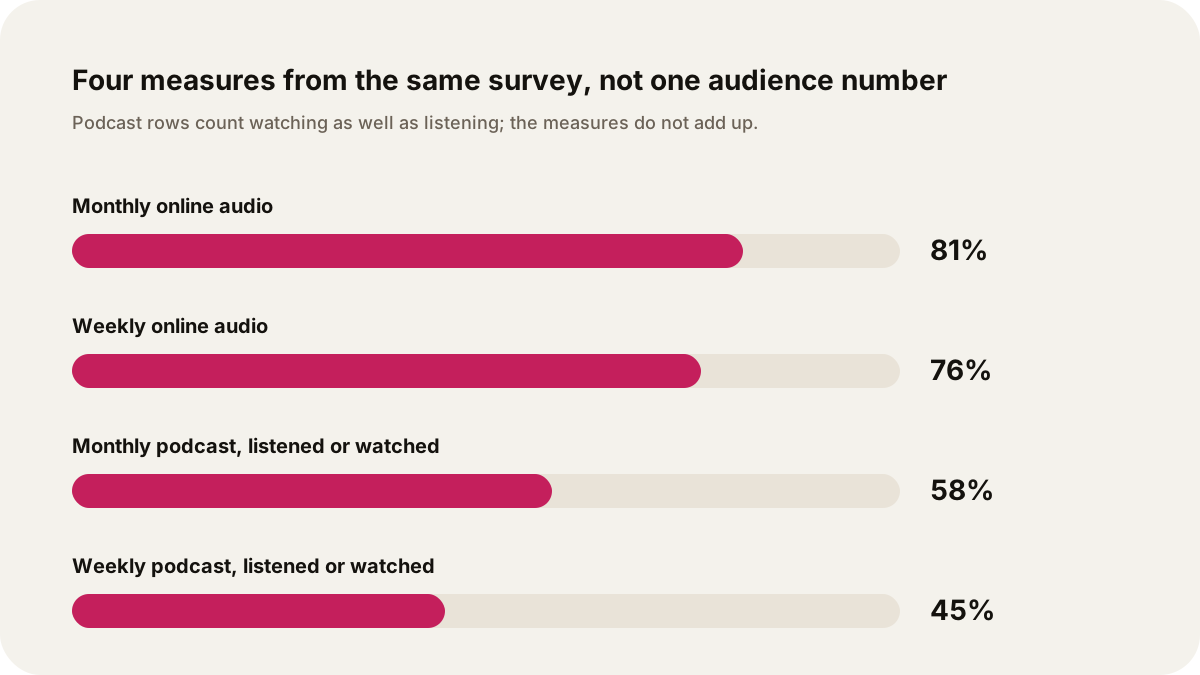
Source: Edison Research at SSRS, The Infinite Dial 2026. Chart: Lissin Editorial.
Keep the measures separate
The primary release from Edison Research at SSRS reports several related measures:
| Measure | 2026 result | What it describes |
|---|---|---|
| Monthly online audio | 81% | Americans aged 12+ who listened in the past month |
| Weekly online audio | 76% | Americans aged 12+ who listened in the past week |
| Monthly podcast consumption | 58% | Americans aged 12+ who listened to or watched a podcast |
| Weekly podcast consumption | 45% | Americans aged 12+ who listened to or watched a podcast |
| Weekly online audio, by AI use | 87% of AI users; 61% of non-users | An association between two reported behaviors |
Online audio includes more than podcasts. Podcast consumption now includes video. The measures overlap, but they answer different questions and cannot be added together as separate audiences.
The reported increase among people aged 55 and older, from 52% in 2024 to 70% in 2026, concerns monthly online audio. It is not a measure of that group's podcast listening.
The trend line has changed with the medium
The Infinite Dial series dates to 1998. Podcast measurement began in 2006, according to National Public Media's account of the 2026 findings. That account also explains that the study began including both listening and watching in podcast consumption in 2025.
Those dates matter when citing a record. A broader measure may accurately describe how people experience podcasts today while requiring care in comparisons with older audio-only findings. A video interview, a daily audio briefing, and a narrative podcast can all sit inside the category without serving the same listener need.
If you are deciding what to listen to, the distinction between a short news briefing and a reported podcast is more useful than the size of the combined market.
What the AI-user difference leaves unanswered
The survey shows an association between AI use and online-audio use. It does not tell us which habit came first, whether one changed the other, or how much of the difference is explained by age and other characteristics.
The January 2026 survey included 2,050 people aged 12 and older. The published method says approximately half came from the SSRS Opinion Panel, recruited through probability sampling, and that the sample was weighted to the US population. Read that wording carefully rather than assuming every respondent came from the same sampling method.
Possible explanations for the overlap would need additional analysis. People could share an interest in digital media, differ in age, or have other habits associated with both activities. Listing those possibilities does not establish any of them. Nor does a difference between the groups show that AI users are responsible for the year's increase.
For a personal-audio product, the unanswered questions are more specific: will someone try a show made from their sources, listen to it, and return for another episode? This survey does not measure those outcomes.
Chatbot news use is a different question
The Reuters Institute's Digital News Report 2026 reports weekly AI-chatbot use for news at 10%, up from 7% a year earlier across its surveyed markets. That is a measure of a particular use of chatbots, not AI-generated audio listening.
It also covers a different population from the US age-12+ Infinite Dial. The two reports can describe adjacent changes in media habits; their percentages should not be treated as a funnel from general AI use into personal podcasts.
Using these numbers in a decision
Before repeating an audience figure, retain its year, population, time window, and definition. For example: “58% of Americans aged 12+ consumed a podcast in the past month in the Infinite Dial 2026 survey, including listening or watching.” Dropping the last clause changes what the statistic means.
To hear a recurring Lissin show, play US Tech Buzz Daily. Decide whether that format fits what you want to hear, then make a show of your own. The listening figures above describe the surveyed population; they do not establish a preference for Lissin or AI audio.
For creating something around your own interests, this source-to-show guide starts with a concrete brief. The broad audience numbers provide context; the relevance of the episode is what you can judge for yourself.
Sources
Correction, 6 September 2026: an earlier version described podcast consumption as audio-only listening and misstated the survey's start date. The figures include watching, the series began in 1998, and the reported AI-user difference does not establish what caused audience growth.
- Edison Research at SSRS, The Infinite Dial 2026: primary figures, definitions, and published methodology.
- National Public Media, Audio continues to break listening records: measurement history and the inclusion of video.
- Reuters Institute, Digital News Report 2026 executive summary: chatbot news use across surveyed markets.
- Edison Research & Triton Digital (2023), "The Infinite Dial: Comprehensive Audio and Podcast Consumer Demographics": longitudinal benchmark survey on spoken-word audio adoption and digital listening patterns.
- Pew Research Center (2023), "Podcasts as a Source of News and Information: Demographic and Behavioral Patterns": empirical study on long-form audio consumption versus superficial browsing.