
Why soap lifts grease: the chemistry of oil, water, and micelles
Soap lifts grease because one end of each molecule interacts with oil and the other stays in water. Micelles make the grease dispersible enough to rinse away.
Why does a greasy plate stay greasy after a rinse, then clean up when you add soap? Water and grease do not mix. Soap has one end that can hold onto grease and another end that can stay in water. That lets the rinse carry away small grease droplets.
Key takeaway: Soap does not make grease vanish. It surrounds the grease with molecules that water can carry.
Why water leaves grease behind
Water is polar. In simple terms, its molecules have slightly positive and negative sides. Cooking grease is mostly made of nonpolar hydrocarbon chains. These chains do not mix well with water.
The American Chemical Society describes water as polar and oil as nonpolar in its chemistry teaching guide. Pour water over a greasy plate and the water can wet the plate around the grease. It does not give the grease a water-friendly surface. The grease stays in a film or breaks into a few oily beads.
What one soap molecule does
Traditional soap is made from salts of long-chain fatty acids. Each soap molecule has two useful parts. Its charged carboxylate head is attracted to water. Its long hydrocarbon tail is nonpolar and interacts more easily with oil.
Chemists call a molecule with these two different sides amphiphilic. You can think of the tail as oil-friendly and the head as water-friendly. The official OpenStax explanation of soap describes this same head-and-tail structure and explains why soap can interact with both oil and water.
When you rub a soapy cloth over a greasy plate, the tails press into the grease. The heads stay in the water around it. Soap also lowers water's surface tension, so the wash solution can spread across more of the plate. It still takes rubbing and rinsing to move the grease away.
How micelles carry grease
In water, soap molecules can gather into small spheres called micelles. The tails point toward the inside, where they avoid water. The charged heads point out, where water can surround them.
If grease is present, the tails can gather around small oily droplets. The heads form a water-friendly outside. This does not turn the grease into water. It gives each droplet an outside that can travel with the rinse.
Soap-coated droplets can also stay apart instead of quickly joining into one large blob. The official OpenStax text describes grease and oil droplets as being surrounded by soap tails inside micelles, after which the grease and dirt can be rinsed away. The exact mix of droplets and soap clusters depends on the soap, water, concentration, and rubbing. The micelle is a useful model of the cleaning step, not a claim that every soap solution has one single shape.
What happens in water: a worked example
Imagine a teaspoon of cooking oil spread across a plate. This is a simple model, not a test of one brand of soap.
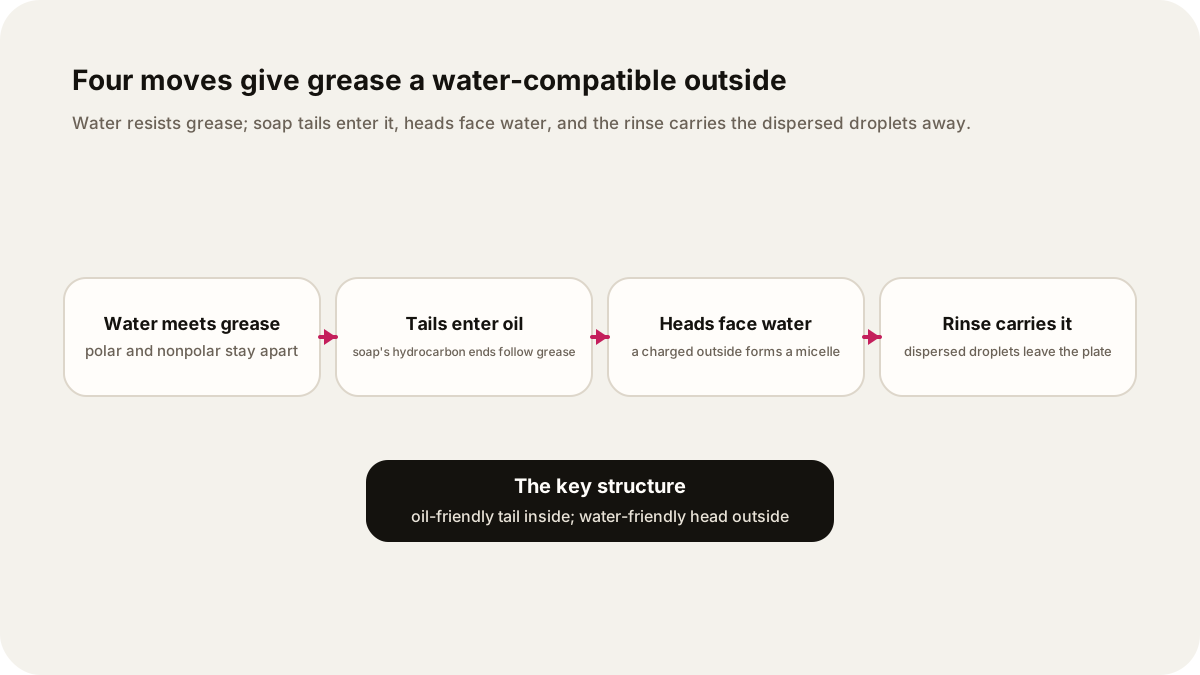
- Water first: Water runs over the plate. The water moves around the oil, but the oil stays together because water and nonpolar oil do not mix.
- Soap and rubbing: Soap tails enter the oil. Rubbing breaks the thin film into smaller patches and brings fresh soap to the edges.
- Soap-coated droplets: More tails gather in the oil. The charged heads face the water. Each small droplet now has soap between its oily centre and the surrounding water.
- Rinse: Water moves past the heads and carries the dispersed droplets away. The plate feels less greasy because the oil has left the surface. The oil has not been destroyed. It has been moved into the rinse.
This example explains why adding soap without spreading it may leave a greasy patch. It also explains why a quick splash of water may move oil without removing it. The water can move around the grease, but soap helps the water carry it.
Why hard water can change soap's behaviour
Hard water contains dissolved minerals, including calcium and magnesium. These ions can react with the charged heads of traditional soap and make insoluble salts. Insoluble means they do not stay dissolved in the water. Some of the result can appear as soap scum.
The U.S. Geological Survey's explanation of water hardness identifies dissolved calcium and magnesium as the main minerals that make water hard. The American Chemical Society's guide also shows calcium or magnesium interfering with soap's cleaning action. Synthetic detergents use different water-facing groups and can avoid some of this reaction. That is why a detergent and a true fatty-acid soap can behave differently in the same tap water.
Turn the explanation into a short audio guide
Start with the question: why does water leave grease behind? Then use four plain steps: water and oil stay apart, soap tails enter the oil, charged heads face the water, and the rinse carries away the small droplets.
The popcorn guide is another example of explaining a physical process in order. The refrigerator heat guide separates what happens inside a system from what someone sees outside it.
A bounded Lissin request could be:
Explain why soap lifts grease in a five-minute science audio guide. Start with why water and nonpolar grease do not mix. Define a soap molecule's charged head and hydrocarbon tail in plain language. Walk through the teaspoon-of-oil plate example in four steps: water, rubbing, soap-coated droplets, and rinse. Explain micelles as a simple model, using the official OpenStax chemistry explanation and the American Chemical Society guide. Do not make health, disinfection, or product-performance claims.
Soap changes the outside of a grease droplet. Once water can surround that outside, the rinse can carry the droplet away.
Sources
- OpenStax, “Soap,” Organic Chemistry: soap structure, hydrophilic heads, hydrophobic tails, micelles, grease rinsing, and hard-water effects.
- U.S. Geological Survey, “Water Hardness”: dissolved calcium and magnesium as the main minerals in hard water.
- American Chemical Society, Celebrating Chemistry: “Why Water and Oil Don't Get Along” and “The Science of Getting Things Clean”: polarity, surfactants, surface tension, oil dispersion, and hard-water effects.