
How a refrigerator moves heat: an audio guide
A refrigerator does not make cold. It uses a refrigerant and a compressor to move heat out of the insulated cabinet and release it into the room.
A refrigerator cools food by moving heat out of its insulated cabinet. It does not make cold and it does not destroy heat. A refrigerant carries heat from the inside to the room, while an electrically powered compressor supplies the work that keeps the cycle moving.
Where does the heat go?
Open the refrigerator door and warm room air enters. Food and shelves also give heat to the air inside. The refrigerator's job is to collect that heat and reject it outside the cabinet. The U.S. Department of Energy's refrigerator technical support document describes residential refrigerators as systems that remove heat from cabinet air. It names four main parts: a compressor, a condenser, a metering or flow-control device, and an evaporator.
That is why the back, sides, or space beneath a refrigerator can feel warm. The condenser is a heat exchanger on the outside of the unit. It releases the heat collected inside, along with the electrical energy supplied to the compressor. The room receives both.
What happens inside the evaporator?
The evaporator is the part of the loop that sits in or beside the cold compartment. A refrigerant enters it at low pressure. At that pressure, the refrigerant can boil at a temperature below the air and food it needs to cool.
As the refrigerant changes from liquid to vapour, it takes in thermal energy. Heat therefore flows from the warmer cabinet air into the colder refrigerant. A fan may move air across the evaporator so the cabinet cools more evenly, but the basic exchange is between the cabinet and the refrigerant in the coil.
The name can sound backward: an evaporator is not adding heat to the refrigerator. It describes the refrigerant's change of state. The refrigerant evaporates while it absorbs heat from the cabinet.
Why does the compressor make the refrigerant hot?
The low-pressure vapour leaves the evaporator and reaches the compressor. The compressor squeezes that vapour. Compression requires work from the motor, and that work raises the refrigerant's pressure and temperature.
The hot, high-pressure vapour can now release heat to a room that is cooler than the vapour. This is the key reason a refrigerator can move heat from a cold compartment into a warmer kitchen: the compressor changes the refrigerant's pressure so the next heat exchanger operates at a higher temperature.
The compressor is therefore more than a pump that pushes fluid around. It supplies the energy that lifts the heat to a temperature where the condenser can reject it. The Department of Energy's explanation of heat pumps uses the same central idea: electricity transfers heat from a cool space to a warm space.
How does the condenser release heat?
The condenser is the warm coil on the outside of the cold space. Air around the coil is cooler than the compressed refrigerant, so heat leaves the refrigerant and enters the room air. As it loses heat, the refrigerant condenses from vapour back into a liquid.
The room does not receive only the heat that was inside the refrigerator. It also receives the compressor's input work. For example, if a small refrigerator removes 100 units of heat from its cabinet and the compressor supplies 30 units of work, the condenser must release about 130 units to the room in that cycle. This is a simple energy-accounting example, not a measured value for a household appliance.
That accounting explains the warm air near a refrigerator. The appliance has moved heat out of the food compartment and added the motor's energy to it before releasing the combined amount.
What does the expansion device do?
After the condenser, the refrigerant is a high-pressure liquid. It passes through a narrow metering device, often a capillary tube or expansion valve. The restriction causes a pressure drop. Part of the liquid flashes into vapour, and the mixture becomes cold enough to enter the evaporator again.
The expansion device does not provide the refrigerator's power. It creates the low-pressure conditions that let the refrigerant boil in the evaporator. The compressor then draws the vapour away, and the loop repeats.
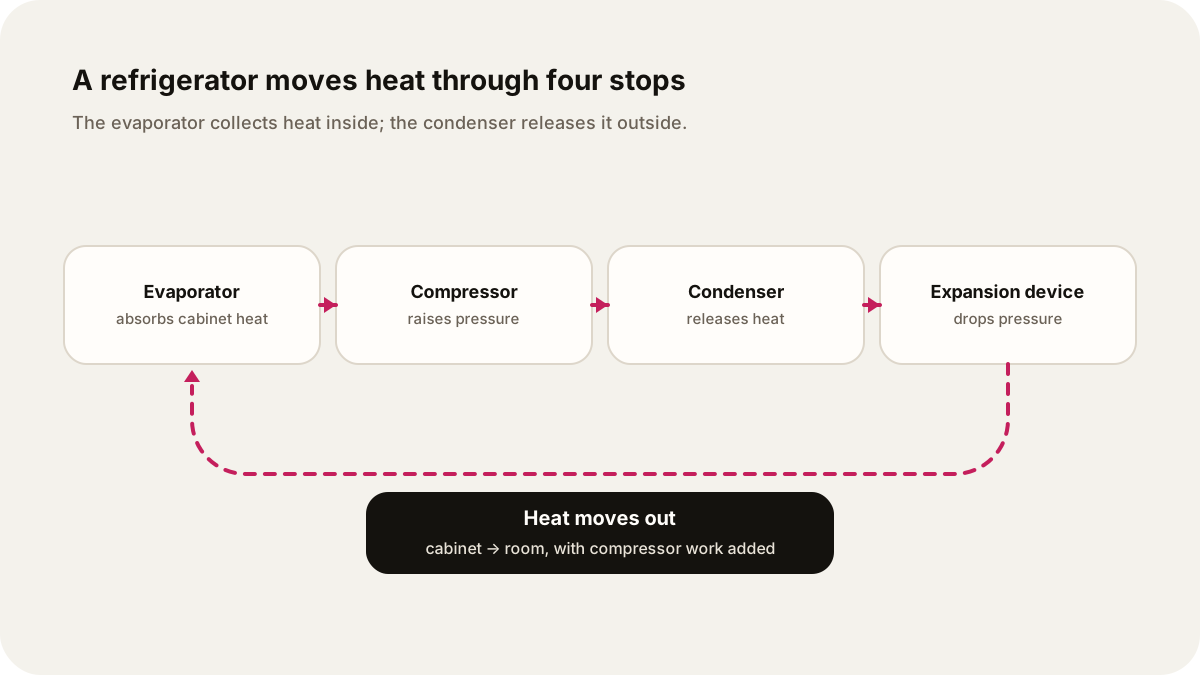
Here is the cycle in order:
- The evaporator absorbs heat from the cabinet as the refrigerant evaporates.
- The compressor adds work and raises the vapour's pressure and temperature.
- The condenser releases the cabinet heat plus compressor work to the room.
- The expansion device drops the liquid's pressure so it can return cold to the evaporator.
The University of Central Florida's University Physics text describes the same pattern: the coolant extracts heat at the evaporator, is compressed, and then exhausts heat through the condenser. Its measure of refrigerator performance compares heat removed from the cold reservoir with the work supplied to the cycle.
A simple way to picture one cycle
Imagine a sealed loop containing a small amount of refrigerant. At the evaporator, the loop passes through the cold cabinet and picks up heat. At the compressor, an electric motor squeezes the vapour. At the condenser, the loop runs through the warmer outside coil and gives that heat away. At the expansion device, pressure falls and the refrigerant is ready to absorb heat again.
The loop is a useful mental model, but it is a schematic example. Refrigerators differ in coil layout, fans, controls, defrost systems, and refrigerants. The four transfers above describe the vapor-compression cycle without pretending that every appliance has the same cabinet temperature or operating schedule.
This sequence also separates two questions that are easy to mix up. “Why is the food compartment cold?” asks where heat is absorbed. “Why is the back warm?” asks where heat is rejected. Both answers belong to the same cycle.
For another example of using a path to explain a technical idea, see the satellite-orbit audio guide. The popcorn guide follows a different heat-and-pressure sequence. If you want to distinguish physical measurements from everyday labels while recording, the pitch and volume guide offers a nearby example.
How to turn the cycle into an audio guide
Start with the answer: “A refrigerator moves heat from its cabinet into the room.” Then name the four stops in order: evaporator, compressor, condenser, expansion device. Give each stop one job, and return to the two visible clues a listener already knows: the inside gets cold and the outside feels warm.
An illustrative request for Lissin could be:
Explain how a household refrigerator moves heat. Start with the answer that it transfers heat from the insulated cabinet to the room. Walk through the evaporator, compressor, condenser, and expansion device in that order. Include the hypothetical 100-units-of-heat plus 30-units-of-compressor-work example, label it as an energy-accounting illustration, and use the U.S. Department of Energy and University of Central Florida sources. Do not give repair, maintenance, or purchasing advice.
Keep the source links with the episode notes. That lets a listener check the component names and the energy path without turning a short explanation into a repair manual.
Sources
- U.S. Department of Energy, Refrigerators Final Rule Technical Support Document: residential refrigerator components, cabinet heat removal, compressor, condenser, metering device, and evaporator.
- U.S. Department of Energy, Pump Up Your Savings with Heat Pumps: electricity-driven transfer of heat from a cool space to a warm space.
- University of Central Florida, University Physics Volume 2, “Refrigerators and Heat Pumps”: evaporator heat absorption, compression, condenser heat rejection, and refrigerator performance.
- Washington State University, “How does our refrigerator work?”: accessible explanation of the refrigerant path through compressor, condenser coil, and evaporator coil.