
Why popcorn pops: the science inside the kernel
Water vapour builds pressure inside a hard shell. When the shell ruptures, softened starch expands into the familiar white flake.
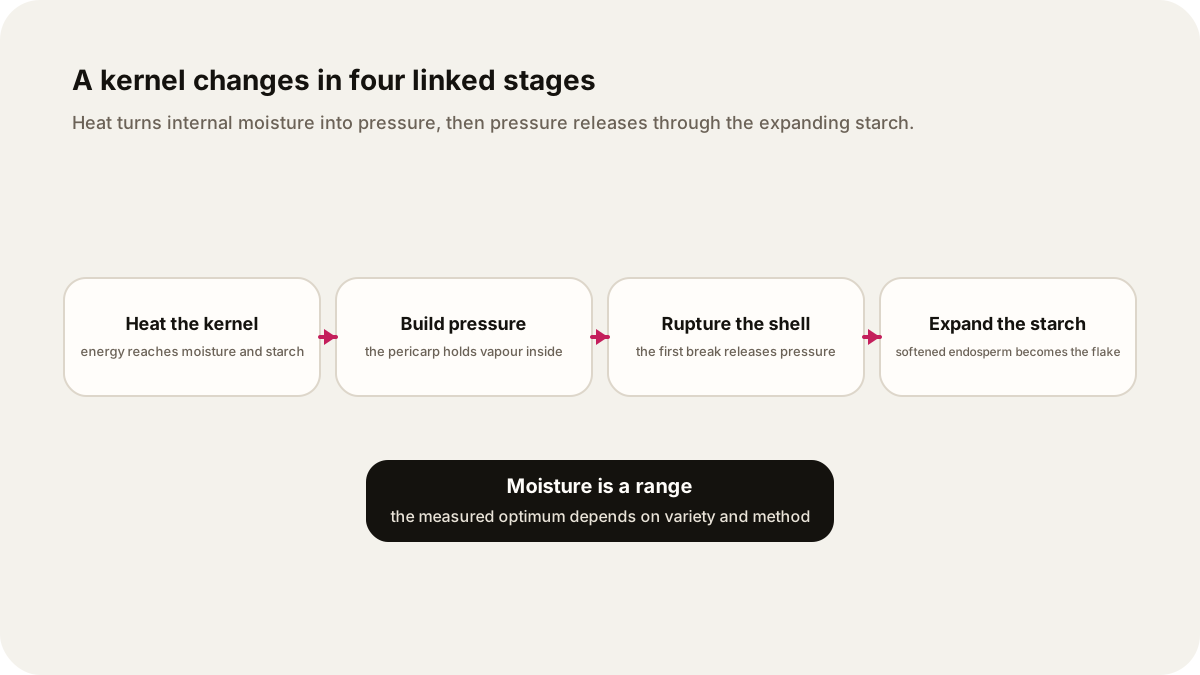
Popcorn pops because water vapour builds pressure inside a hard outer shell, then pushes softened starch outward when the shell ruptures. The kernel carries that water in a centre packed with starch, surrounded by a tough skin called the pericarp. Heat turns the water into pressurised vapour, and the released starch cools into the white flake we eat.
The pop is quick, but the process has a few separate stages. For a useful audio explanation, keep them in order: water heats, pressure rises, the shell ruptures, and starch expands. That sequence matters more than the familiar shorthand that popcorn “explodes.”
Key takeaways
- A popcorn kernel is a small pressure vessel: its pericarp holds in steam while the kernel heats.
- Water supplies the expansion. Starch softens with heat, then spreads as pressure is released.
- Moisture has to be in a useful range. Too little can leave a kernel unpopped; too much can reduce expansion.
- Different popping methods change how heat reaches the kernel, but they do not change the basic mechanism.
What is inside a popcorn kernel?
Three parts do the work. The pericarp is the hard outer layer. Inside it, the endosperm is the tissue that contains starch and a small amount of water. The germ is the part that would grow into a plant, but it is not the driver of the pop.
That outer layer needs to stay intact long enough for pressure to build. Hoseney, Zeleznak, and Abdelrahman described the pericarp as a pressure vessel in a study of popcorn popping. Their experiments put popping at about 177°C, with pressure inside the kernel around 135 psi when the shell breaks. Those values describe their experimental conditions, so they are useful reference points rather than a promise about every pan or microwave.
The water is mixed through the kernel rather than sitting in a hollow pocket. As the kernel warms, that water changes state. The starch around it also softens. Before the shell breaks, the kernel is therefore heating, building pressure, and changing texture at the same time.
Why does heat make the kernel pop?
At ordinary room temperature, the water in a kernel is liquid. Heating raises its temperature until some of it becomes water vapour. In an intact kernel, the vapour cannot expand freely. The pericarp limits the space, so pressure rises inside the shell.
Eventually, the shell cracks. The pressure drops rapidly, and some of the superheated water flashes into vapour. The softened starch is pushed outward with it. The starch stretches into a thin, foamy structure, then cools into the irregular white shape that catches salt and butter.
This is why the popped piece looks much larger than the seed that made it. The kernel has not gained material. Gas-filled spaces have formed as the starch expands. The hard pericarp has split and moved outward, while the cooked endosperm has become the bulk of the flake.
The exact crack matters. A small early leak can release pressure before the starch has expanded well. A strong, well-timed rupture lets more of the kernel expand. The 1983 study found that the first break in the pericarp has a larger effect on final popped volume than later breaks.
Why do some kernels stay unpopped?
An unpopped kernel has usually failed one part of the sequence. It may have lost moisture during storage, or its outer layer may have a weak spot that lets vapour escape. It may also have received uneven heat. If the kernel does not reach the needed pressure and temperature together, it can finish hard and small.
Moisture is a balance, not a simple “more is better” rule. Illinois Extension describes popcorn as needing about 13 to 14 percent moisture for good popping. A peer-reviewed study from the University of Minnesota tested a wider range and found maximum popping volume at 15.5 grams of water per 100 grams of dry kernel under its air-popper conditions. The same study found that extra moisture lowered the temperature at which the pericarp softened, which reduced the pressure available at rupture.
Those numbers are not a kitchen calibration chart. Popcorn variety, storage, kernel size, and the heating method all affect the result. They do explain why very dry kernels can disappoint and why adding arbitrary water to a batch is not a guaranteed fix.
A worked example: read the pop as a sequence
Imagine three kernels in a covered pan. This is a schematic example, not a prediction of the exact time or number of pops.
- Kernel A has an intact outer layer and enough internal moisture. Heat raises its internal pressure until the pericarp ruptures. The starch expands, and the kernel becomes a large flake.
- Kernel B has a weak seam. Vapour escapes early, so pressure never reaches the level needed for a strong expansion. It may split or remain mostly hard.
- Kernel C has lost too much moisture during storage. There is less water available to make vapour, so the pressure rise is too small to open the shell.
The pan supplies heat to all three, but identical heating does not guarantee identical results. The kernels began with different structures and moisture histories. That is why a few “old maids” at the bottom of a bowl do not disprove the pressure explanation.
Does microwave popcorn work differently?
Microwave, stovetop, and hot-air popping use different routes for delivering energy. A microwave heats the water-containing kernel and, in a packaged product, may also heat an added oil or flavouring layer. A pan transfers heat through its hot surface and any oil around the kernel. An air popper moves hot air around the kernels.
The kernel still needs the same chain: heat, vapour, pressure, rupture, and starch expansion. A popping method can change the rate of heating, the evenness of the heat, and the final texture. It does not turn popping into a different chemical event.
For an audio guide, this is a useful place to separate what is measured from what is imagined. You can say that a study compared popping methods or moisture levels. You should not turn one experiment into a universal instruction that every brand will pop best at one exact temperature.
How to turn the explanation into a short audio guide
Start with the listener's question: “Why does popcorn pop?” Then give the answer in one sentence: water vapour builds pressure inside a hard shell, and the pressure release expands softened starch. After that, walk through the kernel in four beats: pericarp, moisture, rupture, expansion.
Use the rainbow formation guide as a model for describing a physical path in order. The sound pitch and volume guide is useful when you need to distinguish a measurable property from the everyday label a listener hears. If you are building a source-led episode, the science RSS guide shows how to keep the source window beside the spoken explanation.
A bounded request could be:
Make a five-minute science audio guide answering why popcorn pops. Explain the pericarp as the kernel's pressure vessel, then describe water vapour, pressure buildup, rupture, and starch expansion in that order. Use the University of Minnesota study, the Hoseney, Zeleznak, and Abdelrahman paper, and the University of Illinois Extension explanation. Say that the temperature and moisture values come from specific experiments or extension guidance, not from a universal kitchen rule. Include the three-kernel schematic example, label it as a model, and keep the source links in the notes.
To make this practical, describe each kernel with the same four words: heat, vapour, rupture, expansion. If a kernel stays hard, check those stages as possibilities: it may have lost moisture, leaked through a weak shell, or heated unevenly.
Sources
- Hoseney, Zeleznak, and Abdelrahman, “Mechanism of Popcorn Popping,” Journal of Cereal Science (1983): pericarp as pressure vessel, approximate popping temperature and pressure, starch expansion, and the effect of the first shell break.
- Shimoni, Dirks, and Labuza, “The relation between final popped volume of popcorn and thermal-physical parameters,” LWT (2002): controlled moisture range, peak popping volume in the study, and the effect of excess moisture on pericarp softening and pressure.
- University of Illinois Extension, “Enjoy Locally Grown Popcorn on the Spoon River Drive” (2017): plain-language explanation of moisture, steam, pressure, storage, and the outer layer giving way.
- Gökmen, “Effects of moisture content and popping method on popping characteristics of popcorn,” Journal of Food Engineering (2004): comparison of moisture levels, genotypes, and popping methods, including expansion and unpopped kernels.