
Choose science RSS feeds for a personal audio show
Start with one science question, then choose the official feeds and linked articles that can answer it.
A science show can answer a question such as “What changed in planetary science this week?” or “Which NASA and ESA updates belong in one explanation?” A narrow RSS selection gives a personal show a clear boundary.
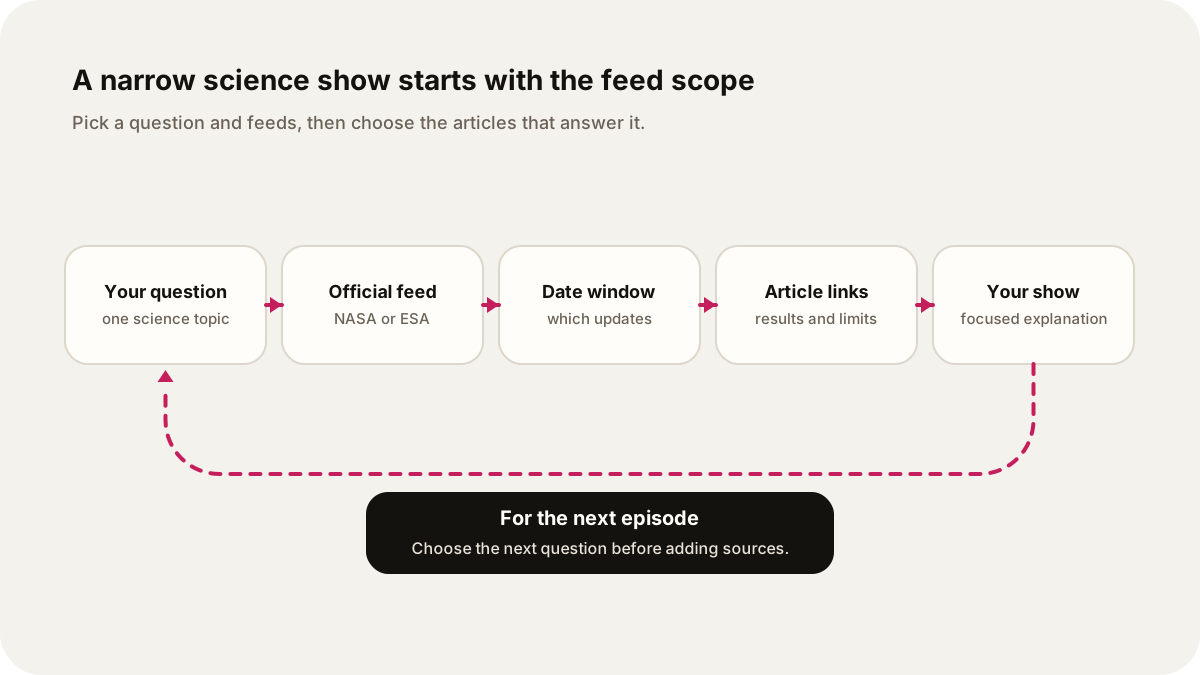
RSS is a list of newly published items. It is useful for finding and selecting sources, while the linked article contains the detail, methods, figures, and qualifications. Treat the feed as an index to inspect, then keep the article open when a claim matters.
Choose one science question first
Start with the listening job. “Keep me informed about space” is a broad subscription. “Explain new evidence about Mars missions, separating observations from agency plans” gives the episode a subject, a time window, and a way to handle uncertainty.
The NASA RSS page currently groups feeds by purpose. Its general-interest list includes News Releases and Recently Published Content. Its topical list includes Technology, Aeronautics, Space Station, and Artemis. Pick one topical feed when you want a beat. A broad NASA feed can be useful for discovery, but it will also bring in material that does not answer your question.
ESA publishes a similar set of choices on its RSS Feeds page. For a science-focused show, the official Space Science feed is a better starting point than the agency-wide Space News feed. Two official feeds can support comparison when the question needs both agencies. They do not turn every item into a shared story.
A feed item is not the full article
A feed entry usually gives you a headline, date, short description, and link. An article may add an instrument name, a study citation, a measurement, a correction, or a sentence that limits what the result means. Those details can change the explanation.
For example, a show about a new telescope result could use the NASA Technology feed to find an update, then use the linked NASA page to identify what was tested. If the episode compares that result with an ESA Space Science item, keep both original pages in the source set. Ask the narrator to name which agency published each claim and to flag where the sources describe plans rather than results.
This is also why a personal show differs from a full reading. A full reading preserves the article’s sequence and wording. A personal show selects, connects, and explains material around your question. Use the full article when you need a table, exact quote, methods section, or complete qualification. Use the show for the route through several related items.
De-duplicate a science backlog by scope
If you have a newsletter backlog, do not add every issue to one episode. Pick a scope such as “NASA and ESA updates about lunar science published in the last 14 days.” Remove repeated announcements, image-only items, and stories outside that beat. Then ask for one sentence on what changed in each source.
That protocol keeps a feed from becoming a generic news roundup. It also gives you a useful stopping point. When the selected items answer the question, save the links and stop. You can make a second show for a different question instead of stretching the first episode.
A concrete source selection
Try this set for a planetary science commute show:
- NASA’s Artemis topical feed for mission updates.
- ESA’s Space Science feed for research and mission science.
- The linked article pages for any item that contains a result, number, date, or named instrument.
Point a Lissin show at RSS feeds, websites or articles, and choose a one-time episode or a recurring show. This illustrative prompt narrows the sources and the question:
Make a 12-minute science show from the NASA Artemis feed and ESA Space Science feed. Cover only items published in the last 14 days that concern lunar missions or lunar science. For each item, name the agency and publication date, explain what is new, separate measured results from plans, and keep the original article links in the notes. Skip announcements that do not add a new fact.
Listen with the source pages available, and read the relevant passage before repeating an exact claim.
For a saved reading list, and for when you need every sentence, compare listening versus reading a long article. Your next show can start with one question, two official feeds, and the few linked articles that answer it.