
Prepare an oral history guide that keeps memory and context separate
Keep the narrator's recollection identifiable beside the interview record and supporting documents.
An oral history recording carries two kinds of information at once. The narrator remembers a life or event from a particular point of view. Documents, dates, maps, and collection notes provide a different kind of context. A short audio guide should let listeners hear that difference instead of smoothing it away.
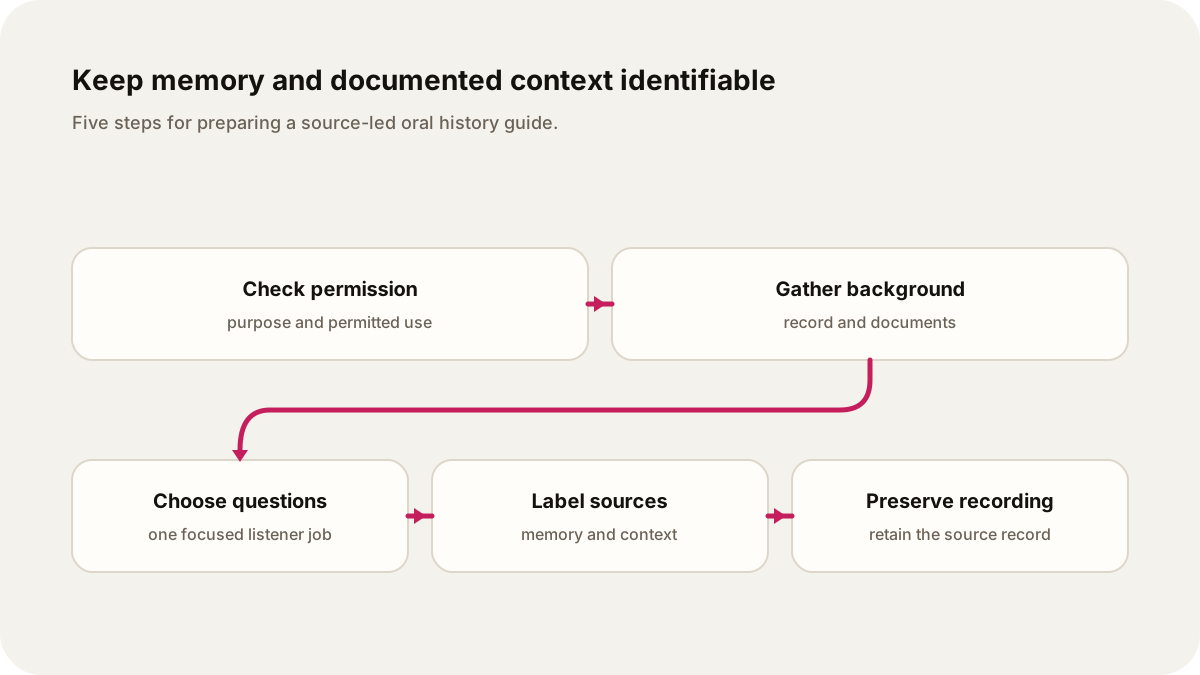
Begin with permission and a clear purpose
Before recording, explain who is conducting the interview, why it is being made, how it may be used, and what the person can choose not to answer. The Smithsonian Folklife and Oral History Interviewing Guide recommends background research, clear open-ended questions, a recording test, and permission to use the results in the way described to the narrator.
The Library of Congress guide to preserving family stories also recommends deciding whom to interview, preparing questions that avoid yes or no answers, testing the recording device, and deciding how the recording will be stored. These are preparation steps, not lines to put in a narrator's mouth.
Separate memory from documented context
An interview is a primary source because it preserves a person's recollection and interpretation. That does not make every date or detail independently verified. The Smithsonian Archives' How to Do Oral History guide describes oral history as original information from planned recorded interviews and advises the interviewer to know what documents already say. That preparation helps the interviewer seek clarification or a new interpretation.
Build the episode in two tracks:
- Narrator track: identify the speaker, date and place of the interview, and the exact section of the recording or transcript being discussed. Preserve pauses, uncertainty, and corrections when they matter.
- Context track: add a dated document, collection note, map, newspaper, or institutional record. Say that it supplies context. Do not use it to silently correct the narrator or turn a recollection into a universal fact.
The Library of Congress record for Fountain Hughes's interview is a useful example. It identifies the interviewee and interviewer, the Baltimore recording date of June 11, 1949, the Cyrus B. Koonce Collection, and the Voices Remembering Slavery collection. The page provides audio and a transcript. A guide can use those catalog facts to orient the listener, then label Hughes's recollections as his account. It should not restage the interview or invent connective dialogue.
Ask for stories, then check the recording
The Smithsonian guide suggests questions beginning with “How,” “What,” or “Why,” and recommends follow-ups such as “Could you explain?” or “Can you give me an example?” Prepare a short list, but leave room for the narrator to follow a meaningful memory. The guide also recommends a test recording and a quiet setting.
For a five-minute listener guide, choose one interview and one question. For the Fountain Hughes record, the question might be: “How does a personal recollection become a historical source when the catalog, transcript, and recording are all available?” The episode can identify the record, play or quote a brief permitted excerpt, and then explain what the catalog documents. Keep direct quotations short and link the full record rather than reproducing it.
Do not write a fictional interviewer voice to bridge gaps. If the transcript contains a pause, overlap, or uncertainty, describe it as part of the record. If the narrator's date conflicts with a document, name the conflict and give the document's citation. A listener can understand an unresolved detail more easily than a polished sentence that hides it.
A five-part recording plan
- Permission and identity: name the interviewer, narrator, date, location, purpose, and permission status.
- The question: state the one historical or cultural question guiding the episode.
- The voice: use a short excerpt or careful paraphrase with a timestamp or transcript location.
- The context: add one verified collection record or document and mark where its information comes from.
- The handoff: tell the listener where to hear or read the full record and how the audio was preserved.
This plan can turn one interview into a focused listening guide without claiming that the narrator speaks for everyone who lived through the period. For a practical comparison, see the public lecture listening syllabus, the audio study guide and retrieval prompt guide, and the source-checking guide for AI audio.
An illustrative prompt
Prepare a five-minute personal audio guide from one oral history interview. Use the interview record and transcript as the narrator's source, and use the Library of Congress oral-history guidance and Smithsonian oral-history guidance for preparation. Identify the narrator, interviewer, date, place, collection, and source location. Separate the narrator's memory from documented context. Include consent, open questions, a recording check, and a preservation note. Use no manufactured quotes, invented interviewer dialogue, personal experience, or voice restaging. Treat proposed episode wording as an outline and keep the source record beside it.
Before release, check the collection page, transcript, rights information, and any context document again. Link the record so listeners can inspect the evidence for themselves.
Sources
- Library of Congress, Interview with Fountain Hughes: verified audio, transcript, date, contributors, collection, headings, and rights notes for one real oral-history record.
- Library of Congress, Preserving Family Stories: preparation, question, recording, and preservation guidance.
- Smithsonian Center for Folklife and Cultural Heritage, The Interview: research, open questions, permission, recording test, and interview structure.
- Smithsonian Institution Archives, How to Do Oral History: primary-source framing, preparation, questioning, recording, and preservation guidance.