
Turn one recipe into a personal audio guide
Start with one source recipe, then ask for an audio guide that preserves the quantities and order while giving you room to cook.
You have one recipe open on the counter and want to cook without reading every line twice. A spoken guide can help, but only if it stays faithful to the source: the same measurements, the same order, the same serving count, and pauses where your hands need to work.
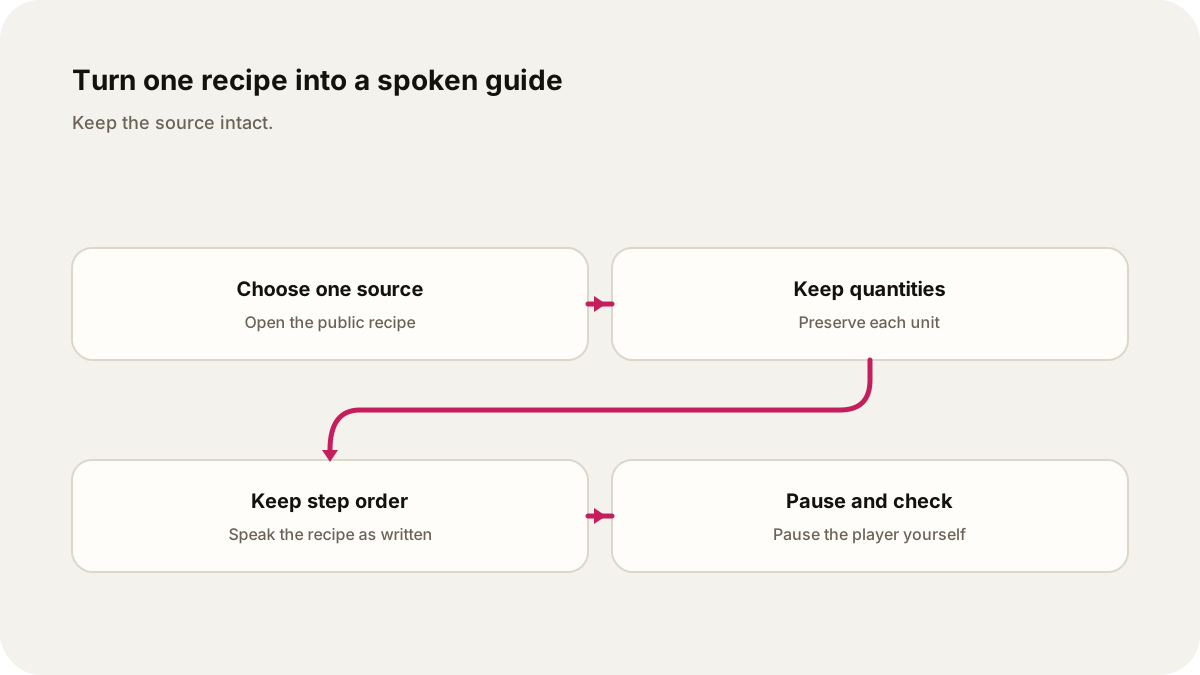
Start with one public source
Choose a recipe you can open and check. For this example, the source is MyPlate’s 2-Step Chicken, which makes 4 servings. Its ingredient list is short: 1 tablespoon vegetable oil, 2 boneless, skinless chicken breasts, 1 can (10.75 ounces) reduced-sodium cream of chicken soup, and 1/2 cup water.
Keep those units in the spoken version. “One can, 10.75 ounces” is useful information; rounding it to “about 11 ounces” changes the source. The same goes for the half cup of water and the two chicken breasts. If you want substitutions or a different yield, make that a separate request instead of quietly rewriting the recipe.
Turn the directions into listening beats
The source has six ordered directions. Keep that sequence in the spoken guide and give each action a short cue. For example, the guide can open with “wash your hands with soap and water,” then say “heat the tablespoon of oil in a skillet at medium-high.” It can identify the next actions in order: cook the chicken for 10 minutes, set it aside, bring the soup and water to a boil, then return the chicken and simmer for another 10 minutes or until it reaches 165°F internally.
This is an adaptation for audio, not a new recipe. The guide can announce “step three,” repeat a measurement, and tell the listener when to pause. It cannot sense when a pan has heated or when a boil has started, so the listener must decide when to resume. It should not add a guessed browning cue, change the heat setting, or promise that ten minutes is always enough. MyPlate supplies the recipe’s times and temperature condition; USDA Food Safety and Inspection Service guidance supports checking poultry with a food thermometer at 165°F.
Ask for the format you need
Label your request as an adaptation of the linked source. Tell the guide what to preserve and how you will listen.
Example request:
Using the MyPlate 2-Step Chicken recipe at the linked source, make a spoken cooking guide for 4 servings. Keep every ingredient quantity and the original six-step order. Say each measurement clearly, say when I should pause playback after each action and cooking time, and remind me to check the chicken at 165°F with a food thermometer. Do not convert units, add substitutions, or invent doneness cues.
In Lissin, you can describe that format in your own words and choose the length and voice for the show. A short version might read the ingredients first, then walk through the six steps. A longer version might repeat the current step after each pause. Either way, the recipe remains the source of truth, while the spoken steps give you a sequence to follow.
Keep the source visible
A spoken guide is easier to trust when you can return to the public recipe. Keep the MyPlate page open or save it with your cooking notes. If the page changes, check the current ingredient list and directions before using an older recording. Do not treat a generated guide as permission to skip the source’s measurements or safety check.
This is different from choosing something to hear while dinner is cooking. The subject here is one recipe, and the audio follows that recipe. For broader kitchen listening, try Audio for hands-busy moments, and for a walk or a commute, planning audio for the journey.
Before you press play, confirm the source, servings, ingredients, and step order. Then set the phone where you can pause it safely, keep the recipe nearby, and resume each cue when the next action is ready.
Sources
- MyPlate, 2-Step Chicken, retrieved October 5, 2026: servings, ingredients, directions, cooking times, and internal temperature.
- USDA Food Safety and Inspection Service, Safe Minimum Internal Temperature Chart, retrieved October 5, 2026: 165°F minimum internal temperature for poultry measured with a food thermometer.