
NASA Crew-13: how launch, rendezvous, docking, and crew rotation fit together
Separate each Crew-13 milestone and check NASA's current status before treating a target time as a result.
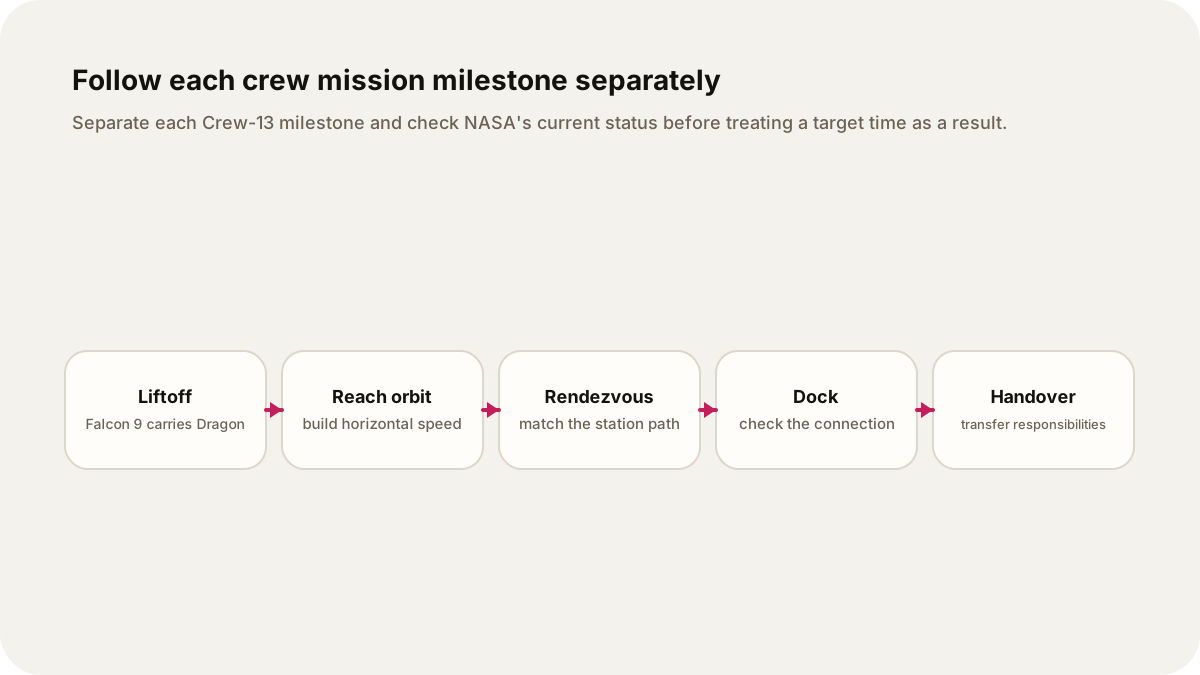
A station visit has several milestones: reaching orbit, catching up with the International Space Station, docking, and opening the hatch for the crew. Each needs its own confirmation. NASA's Crew-13 mission provides a recent example of that sequence.
Source check, 2 October 2026: NASA reports that Crew-13 launched on 1 October. Dragon docked at 7:05 p.m. EDT that day, or 23:05 UTC. NASA then confirmed crew entry following hatch opening at 9:19 p.m. EDT, which was 01:19 UTC on 2 October. These are reported milestones, replacing the launch targets used in the original 1 October guide.
What a crew rotation does
The International Space Station is a working laboratory, so a crew rotation keeps experiments, maintenance, and station operations staffed. NASA calls the period when an incoming crew arrives before the outgoing crew departs a direct handover. The overlap gives the two crews time to transfer procedures and responsibilities while the station remains occupied. NASA's crew-handover explainer describes this as the normal pattern for current commercial crew flights.
Crew-13 is a SpaceX Dragon flight under NASA's Commercial Crew Program. NASA's mission page identifies Jessica Watkins, Luke Delaney, Joshua Kutryk, and Sergey Teteryatnikov as the four crew members. The mission page also describes Crew-13 as the 13th crew-rotation mission of SpaceX's human space transportation system. These labels describe the mission's role and vehicle history. They do not tell you whether a launch or docking has happened.
Launch puts the vehicle on the right path
At liftoff, a Falcon 9 accelerates Dragon through the atmosphere and into orbit. Reaching orbit means building enough horizontal speed that the spacecraft falls around Earth instead of returning straight to the ground. The launch vehicle's job ends in stages, while Dragon continues as the crew's spacecraft.
Orbit is only the starting point for a station visit. The station is also moving around Earth, and Dragon must reach the same orbital path at the right time. A launch window is therefore a geometric constraint. A delay can change the point where the rocket leaves Earth and require a new calculation for the rendezvous.
NASA's Commercial Crew spacecraft guide explains that Dragon uses a series of automated maneuvers to rendezvous with the station. The crew and mission control monitor those maneuvers, and the crew can take control if needed. This is why a successful liftoff does not by itself mean the spacecraft is at the station.
Rendezvous is the approach phase
Rendezvous means matching the station's orbit and closing the distance in a controlled way. Dragon may be below, behind, or farther along the station's path after launch. Small engine burns adjust its orbit until the spacecraft reaches a planned approach point. Mission controllers watch navigation, vehicle systems, and the station's configuration during this phase.
The word “rendezvous” describes relative position and motion. It does not mean the vehicles are touching. That comes next. A mission update that says Dragon has begun rendezvous tells you the approach is under way, while a docking update describes a later milestone.
Docking joins two spacecraft
Docking is the mechanical connection between Dragon and a station port. NASA's Sep. 29, 2026 coverage advisory said Crew-13 was targeted to dock at the forward-facing port of the station's Harmony module, with the times subject to adjustment during real-time operations. After the connection is checked and the pressure boundary is safe, the hatch can open and the arriving crew can enter.
The scheduled sequence matters because each step has a different failure mode and a different confirmation. Weather can delay launch. Navigation or vehicle checks can delay approach. Contact can occur before teams confirm a secure connection. Hatch opening follows additional checks. Use the agency's timestamp and verb when you report an update.
How to follow the day without mixing claims
Keep four lines in your notes:
- Launch: planned, scrubbed, or confirmed, with the source time.
- Orbit and rendezvous: whether Dragon is on the way and what NASA has confirmed.
- Docking: target time, contact, or confirmed attachment.
- Handover: hatch opening, welcome, and the outgoing crew's later return plan.
NASA's launch and docking advisory, published 29 September 2026, records the original schedule. The later mission reports linked above confirm what happened. Keep those two types of source separate when following the next crew rotation: an advisory gives targets, while a mission update records a milestone.
If you want a spoken orientation before reading the live updates, you can ask Lissin's iPhone app for an explanatory episode using the NASA links as sources. Treat that episode as a guide to the terms, then return to NASA for the current operational status.
Sources
- NASA's SpaceX Crew-13 Launches: 1 October launch report.
- Dragon Docks Bringing SpaceX Crew-13 to Station: confirmed docking time and port.
- Crew-13 Members Enter Station, Join Expedition 75: crew entry following hatch opening.
- NASA's SpaceX Crew-13 mission: mission role, crew, and targeted launch date.
- NASA Sets Crew-13 Launch, Docking Coverage: Sep. 29, 2026 schedule and operational caveat.
- NASA, Top Things to Know about Space Station Crew Handovers: direct handover context.
- NASA's Commercial Crew Partners: SpaceX: Dragon rendezvous and docking operations.