
A listening guide for the 2026 Nobel Prize announcements
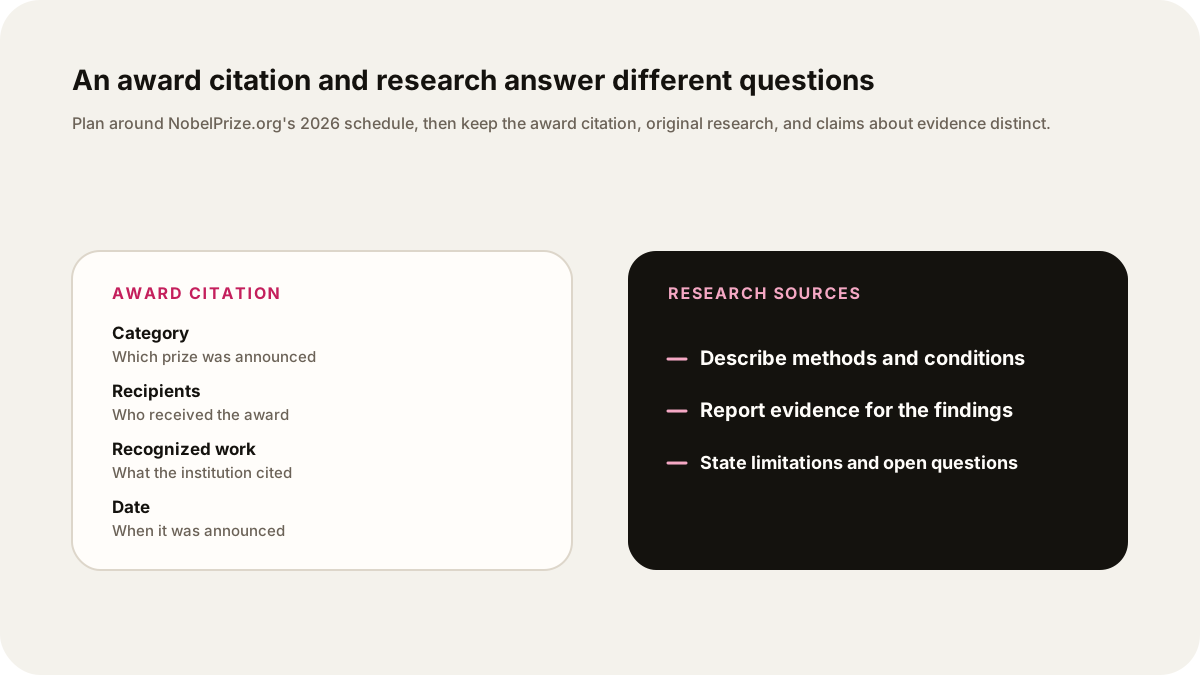
Plan around NobelPrize.org's 2026 schedule, then keep the award citation, original research, and claims about evidence distinct.
The 2026 Nobel Prize announcements are scheduled for October 5 to 12. NobelPrize.org publishes the dates and earliest announcement times, then links readers to the prize-awarding institutions and the official digital broadcasts. That schedule is enough to plan a listening routine. It is not evidence about who will receive a prize.
Check the announcement times
The official 2026 announcement schedule lists six announcements:
- Physiology or Medicine, October 5, at 11:30 CEST at the earliest.
- Physics, October 6, at 11:45 CEST at the earliest.
- Chemistry, October 7, at 11:45 CEST at the earliest.
- Literature, October 8, at 13:00 CEST at the earliest.
- Peace, October 9, at 11:00 CEST.
- Economic Sciences, October 12, at 11:45 CEST at the earliest.
The page says the announcements will be broadcast through the Nobel Prize's official digital channels and that in-depth information will be published on Nobelprize.org. Times marked “at the earliest” are a reason to check the official page rather than schedule an episode as if the announcement must occur at that exact minute.
Separate three kinds of listening
An announcement tells you that an institution has selected a laureate or laureates and names the prize citation. That citation is the award's official description. It is the first answer to “what was recognized?”
A research explanation answers a different question: what did the work involve, what evidence supports it, and what limits should a listener understand? The Nobel Prize page may link to an advanced information document, a press release, or a popular information text. Those documents are useful starting points, but each has a different purpose. A citation is not a full proof of the underlying result.
Keep those layers visible in the audio. Say “the awarding institution cited this work for...” when reading the official citation. Say “the paper reports...” when describing a study. Say “this explanation does not establish...” when the source leaves a question open.
Build a source packet after the announcement
For each prize, collect a small packet before asking for an audio explanation:
- The official Nobel announcement and citation.
- The Nobel Prize's information page or linked background document.
- The original paper, book, project record, or institutional source named by the awarding body, when available.
- One note describing what the sources do not show.
The Nobel Prize's nomination and selection page explains that nominees' names cannot be revealed until 50 years later. That rule matters during announcement week. A prediction, rumor, or nomination list cannot be presented as an official account of the year's decision. Wait for the announcement and use the published citation.
Ask for an explanation with a boundary
Try this request in Lissin:
Create a 12-minute research explainer using the official Nobel announcement, the prize citation, and the original source I provide. Start by stating the announced category and citation. Then explain the research question, method, main evidence, and stated limitations in plain language. Label which statements come from the Nobel awarding institution and which come from the original research. Do not predict future winners, infer unpublished nomination details, or treat the prize citation as proof of every technical claim.
This brief gives the episode two jobs in order. First, it records what the institution announced. Second, it helps a listener understand the cited work. If the original source is unavailable, the episode should say so and stop short of claiming a complete explanation. For example, if the citation names a discovery but the linked paper is unavailable, the audio can explain only the citation and the public background document.
Listen for the verbs
The difference between a careful and careless summary often sits in one verb. “The study measured” is narrower than “the study proved.” “The committee cited” is different from “the committee verified every implication.” “The authors observed an association” does not mean “the authors established a cause.” Keep the source's level of certainty when moving from print to speech.
After the episode, open the citation and the original source. Check the names, category, date, and exact claim. If the audio adds a number, check its denominator and the conditions under which it was measured. For a concrete check, compare every number in the episode with the table, figure, or paragraph that produced it, then record the source section in your notes.
Sources
- Nobel Prize announcement dates for 2026: official dates, earliest times, venues, and digital-broadcast note.
- Nobel Prize nomination and selection: official description of nomination confidentiality and selection context.
- About the Nobel Prize: official overview of the prize categories and annual announcement practice.
- Lissin for iPhone.