
A World Space Week audio project for one rocket question
World Space Week runs October 4 to 10, 2026. Follow one rocket question from flight sequence to engineering trade-off without turning plans into results.
World Space Week runs from October 4 to 10, 2026, under the theme “Rocket Revolution.” The theme gives an adult learner a useful boundary for a short audio project: follow one rocket question from the engineering problem to the reason it matters.
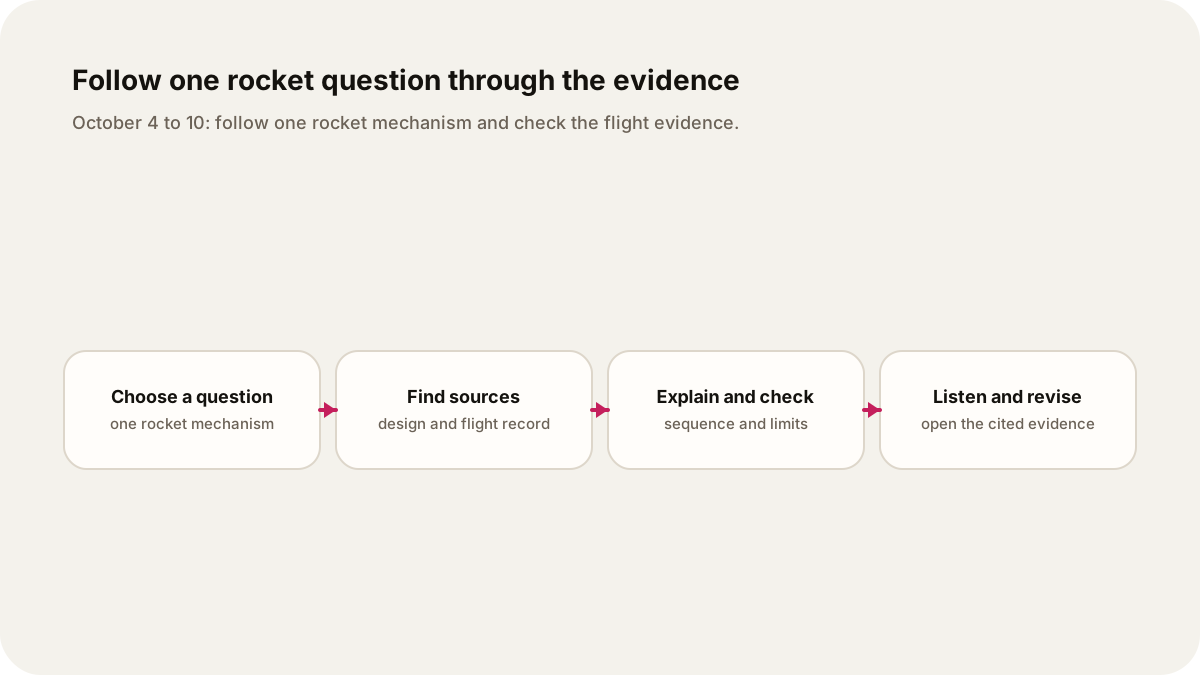
Start with one question
“What makes a rocket reusable?” is wide enough to produce a vague history lesson. Narrow it before collecting sources. A better brief asks: “What has to happen after a booster separates for the first stage to return, and which parts of that process are still difficult?”
That question gives the episode a job. It asks for a sequence, a mechanism, and a boundary. It also leaves room to say when a source describes a proposed system rather than a demonstrated result. Keep the example specific to Falcon 9. A landing sequence documented for one vehicle should not become a claim that every rocket can land and fly again.
The official World Space Week site identifies October 4 to 10 as the annual celebration. The Vikram Sarabhai Space Centre's 2026 guide names “Rocket Revolution” as this year's theme and describes the subject as changing access to space through newer launch systems. Those pages establish the event and its scope. They do not answer the engineering question for you.
Choose sources that answer different parts
Record the title, publisher, publication date, and the exact section that supports each claim. If a company says a system will lower launch cost, write that as a company claim. Do not turn it into a measured industry result without evidence that compares costs under stated conditions.
Explain Falcon 9's return sequence
NASA's Falcon 9 launch and landing infographic gives a concrete answer to the question. After first-stage separation, the booster flips, uses a boostback burn to change its path, fires an entry burn to slow down, and uses grid fins for aerodynamic guidance. A final landing burn brings the stage down vertically. NASA's Commercial Crew press kit identifies the grid fins and carbon-fiber landing legs as critical landing elements. SpaceX's Falcon 9 vehicle page describes the first stage's nine Merlin engines, propellant tanks, grid fins, and landing legs.
The episode can follow that documented sequence:
- Nine Merlin engines provide the first-stage thrust during ascent.
- Stage separation leaves the booster on a return path while the second stage continues with the payload.
- A boostback burn changes the path, an entry burn reduces speed, and grid fins steer the falling stage.
- A final landing burn controls the vertical touchdown on a landing zone or droneship.
- Recovery, inspection, and servicing decide whether that booster can fly again.
The sequence is a Falcon 9 explanation, not a universal rocket recipe. The Falcon 9 User's Guide says SpaceX services and inspects flown hardware and uses lessons from flight to improve designs and procedures. That evidence supports a claim about Falcon 9's reuse process. It does not prove that reuse always lowers cost or that another vehicle can copy the same sequence.
Explain the trade-off, then stop
Reusable hardware can reduce the need to build a new first stage for every launch, but recovery adds hardware, propellant, guidance work, and a landing requirement. A useful episode states the trade-off plainly. It asks what the design gains and what the design must carry to gain it.
Keep the scope to one question. Claims about launch cost, other vehicles, or future schedules need separate evidence.
Turn the research into a listening brief
Try this request in Lissin:
Create a 10-minute audio explainer for an adult learner during World Space Week 2026. Answer one question: what must happen for a rocket's first stage to return and fly again? Use the official World Space Week page plus the technical sources I provide. Explain the flight sequence in order, define reusable hardware, separate demonstrated results from company plans, and name one unresolved engineering trade-off. Include source titles and dates in the episode notes. Do not predict launches or claim that reuse always lowers cost.
That prompt states the audience, time limit, source boundary, and stopping point. After listening, open the sources and check whether the explanation preserved their conditions. For example, verify that “grid fins steer the returning stage” remains tied to Falcon 9 and that “inspection and servicing support reflight” is attributed to the Falcon 9 User's Guide. Audio can organize a technical idea; it cannot replace the evidence behind a precise performance claim.
Sources
- World Space Week: official event site and October 4 to 10 dates.
- Vikram Sarabhai Space Centre, About WSW 2026: official 2026 theme and description of the launch-access focus.
- NASA, Falcon 9 launch and landing infographic: documented boostback, entry burn, grid-fin guidance, and landing-burn sequence.
- NASA Commercial Crew Program press kit: Falcon 9 landing hardware and first-stage description.
- SpaceX Falcon 9 vehicle page: first-stage engines, propellants, grid fins, landing legs, and reflight description.
- SpaceX Falcon User's Guide: inspection, servicing, and reflight context.
- Lissin for iPhone.