
Read a baseball box score, then write an audio recap
Translate the team line and pitching notation before telling the story of a game.
The line on a baseball box score can look like a row of abbreviations until you know which numbers answer which question. Runs tell you what crossed home plate. Hits tell you how often batters reached safely by hitting the ball. Errors record defensive plays that the official scorer judged an average fielder should have made. Innings pitched count outs, not decimal tenths.
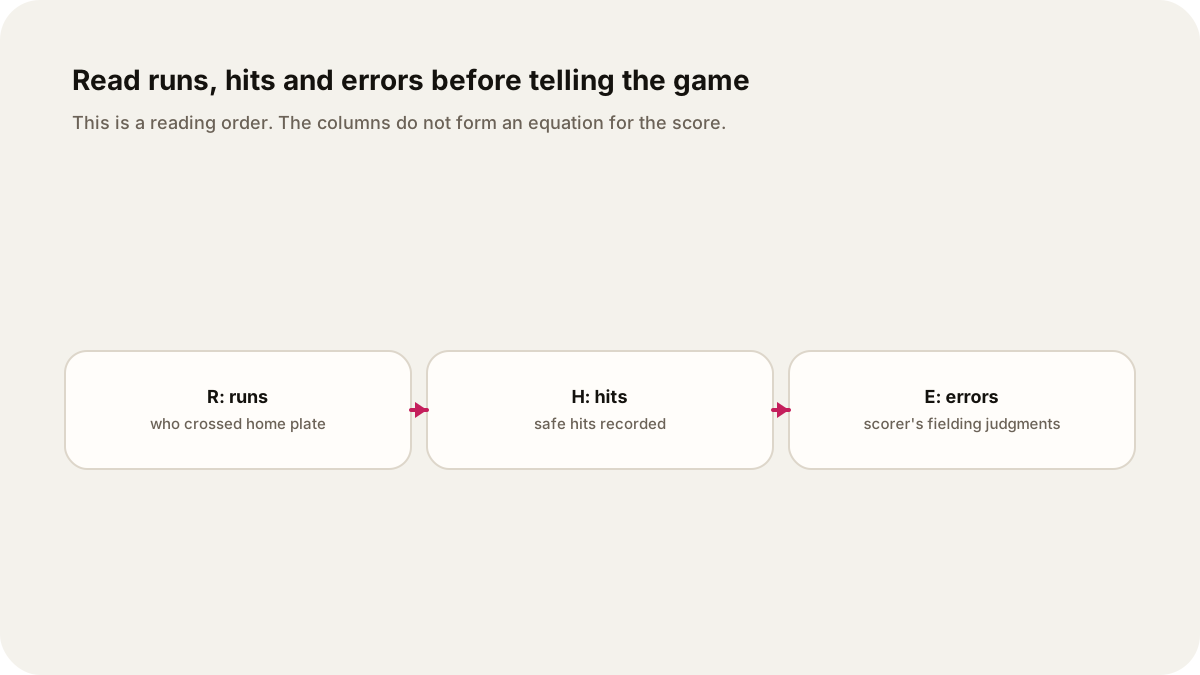
Read the team line before the player lines
Start with the final score. A team's R is its runs, the number of times its players crossed home plate. The MLB glossary definition of a run makes an important distinction: the route to base does not erase the run. A runner who reached on an error can still score and receive credit for a run.
The H column is hits. An MLB hit means the batter reached base in fair territory without the official scorer ruling that the play was an error or fielder's choice. Singles, doubles, triples, and home runs all count as hits, even though they move runners different distances.
The E column is errors. The official MLB definition covers a fielder failing to make an out that an average fielder should have made, along with certain poor plays that let runners advance. An error is a scoring judgment, not a general rating of how badly a team defended.
Those columns do not form a neat equation. MLB's run definition notes that a runner can reach on an error or fielder's choice and still score. A team can also collect hits without scoring if runners are stranded. Use the play-by-play to explain how the runs came.
Translate pitching innings into outs
Pitching lines use a compact convention that is easy to misread aloud. MLB explains that innings pitched increases for each out recorded while the pitcher is working. Three outs equal one inning, so 5.2 IP means five innings and two outs, or 17 outs. It does not mean five and two tenths innings in the ordinary decimal sense.
This matters when you describe a starter's workload. Say “five and two thirds innings” or “17 outs,” then give the runs, hits, walks, and strikeouts from the line. If a relief pitcher appears but records no out, the appearance does not automatically add a third of an inning. MLB also notes that a batter reaching on an error does not give the pitcher an out for the IP total.
A worked example, clearly hypothetical
Here is a made-up score for practice, not a report of a real game:
| Team | R | H | E |
|---|---|---|---|
| Northport | 5 | 8 | 1 |
| Lakeside | 3 | 7 | 2 |
The first sentence of an audio recap can be simple: “Northport beat Lakeside 5 to 3 in a hypothetical example.” Next explain the shape of the game: Northport scored five runs on eight hits and made one error; Lakeside scored three runs on seven hits and made two errors. Those totals alone do not tell you when the runs came or whether an error directly led to a run.
Add a hypothetical pitching line for a nine-inning game: “Northport starter A recorded 5.2 innings, meaning 17 outs, and left with a 4 to 2 lead. The bullpen recorded the final ten outs.” Keep the player names and events labelled as invented. A listener should never mistake a teaching example for a live result.
Turn the score into a spoken recap
Use the official game page or team box score for a real game, then make a short outline before recording:
- State the teams, final score, venue, and date exactly as published.
- Name the scoring difference and the innings in which the lead changed.
- Pick one or two verified turning points, such as a home run, a bases-loaded walk, or an error that extended an inning.
- Read the notable pitching line with IP translated into outs based language.
- Close with the next scheduled game only after checking the team's official schedule.
Keep a source beside each fact. A spoken recap can be lively without filling gaps with guesses about momentum, intent, or what a player “must have been thinking.” For a useful audio brief, ask for a five minute recap with the final line first, then the scoring sequence, then the pitching and fielding details. State that every result must come from the linked official box score.
For a broader source to audio workflow, see how to verify an AI generated news summary and the guide to following a fast moving story. Both are useful when the source may change after publication.
Sources
- MLB glossary: Run: what a run records and why the way a runner reached base does not remove the run.
- MLB glossary: Hit: the official definition and four hit types.
- MLB glossary: Error: the official scorer's standard for a defensive error.
- MLB glossary: Innings Pitched: outs based calculation of IP and the meaning of partial innings.