
Read a historical newspaper as an audio guide
A newspaper page records a deadline and a point of view. Hear its reports, messages, and later context as different kinds of evidence.
A historical newspaper records a date, a deadline, and a point of view. To turn one issue into an audio guide, read its reporting, advertisements, and later historical context as different kinds of evidence.
Start with one page
Use a real issue, not a generic story about an era. The Library of Congress’s Chronicling America scan of the Morgan City Daily Review from October 14, 1918 gives a compact example. Its page carries an official interview with U.S. Surgeon General Rupert Blue about the influenza outbreak, alongside local news and a public health message.
First read the issue details aloud: the title, date, edition if supplied, page number, and archive link. Then describe only what the page says. In the interview, the Surgeon General’s office describes symptoms, asks how people can guard against influenza, and advises ventilation, avoiding crowds where possible, covering coughs and sneezes, and following local health officers. Those are statements printed in that issue. They are not a modern diagnosis of every illness in 1918.
Reporting has an owner and a deadline
The interview is reported material with an attributed speaker. A local death notice or case count is another kind of report, tied to the paper’s place and date. A headline compresses a story. The page does not tell you everything the editor knew, everything officials knew, or everything that happened after the press deadline.
Say “the paper reported” or “the interview attributed this advice to Surgeon General Blue.” That phrase keeps a dated claim tied to its source. Preserve spelling oddities in a quotation only when they matter. Otherwise, paraphrase and link to the scan.
An advertisement is evidence of selling
The same page includes the familiar public health line “Coughs and Sneezes Spread Diseases,” presented as a warning alongside the news. Treat that text as a public message placed in the paper, not as independent proof that the advice worked. A commercial advertisement would need the same care: identify the product, seller, offer, and intended customer. Its claims describe what someone wanted readers to buy or believe.
The National Archives’ 1918 influenza history provides later context for the page. It estimates that the pandemic killed about 50 million people worldwide and says the U.S. death toll was about 675,000. Those figures help a listener understand the scale, but they were not available to the Morgan City editor on October 14, 1918. Put the figures after the newspaper reading and label them as later historical context.
The archive’s record list also shows why a later source can change the frame. Government documents, photographs, and local records preserve experiences that a single newspaper page cannot. The CDC’s historic timeline places the October 1918 reporting in a wider sequence of military movement, outbreaks, and public health action.
A short listening script
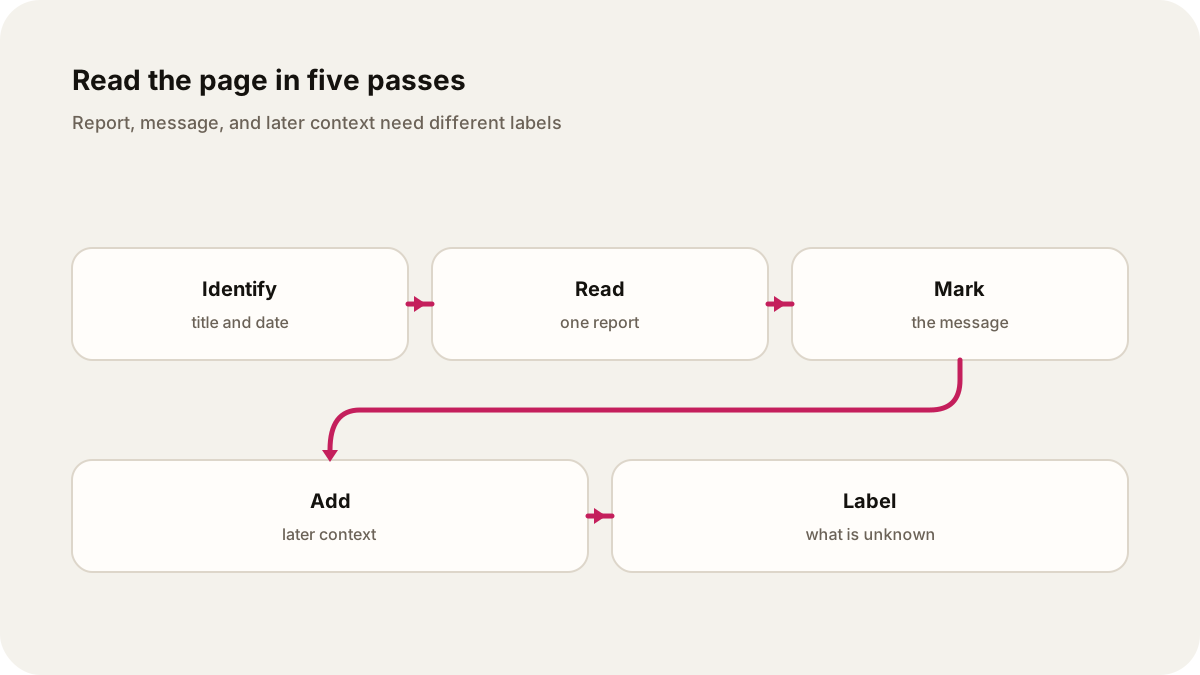
- Identify the page and read the date.
- Narrate one report, naming its source and its limits.
- Pause for the public message or advertisement, and say what it was trying to do.
- Add one later archive source with its own date and scope.
- End with a question the page cannot answer without another record.
Example show request: “Read page 4 of the October 14, 1918 Morgan City Daily Review from Chronicling America. Separate the Surgeon General interview, the public health message, local notices, and later context from the National Archives. Quote only short phrases, identify who made each claim, and finish with two questions that require another source.”
Ask Lissin to make the episode a page-by-page reading, a newsroom reconstruction, or a comparison with a second issue. The oral history audio guide shows how to keep a speaker’s words distinct from a narrator’s framing. The museum object audio guide uses a similar object-first method, while the historical map audio guide separates what a document shows from what a listener might infer.
Do not fill gaps with a confident story. Give the archive link, keep the issue date in the recording title, and mark later interpretation as later interpretation. The result lets a listener hear the period document without mistaking it for the whole past.
Sources
- Library of Congress, Morgan City Daily Review, October 14, 1918, page 4, retrieved October 5, 2026: contemporaneous interview, public health message, and page context.
- National Archives, The Flu Pandemic of 1918, retrieved October 5, 2026: later U.S. and global historical context.
- National Archives, Influenza Epidemic records list, retrieved October 5, 2026: related government records and photographs.
- CDC archive, 1918 Pandemic Influenza Historic Timeline, retrieved October 5, 2026: chronology for later context.