
Ice hockey icing: when the whistle stops play
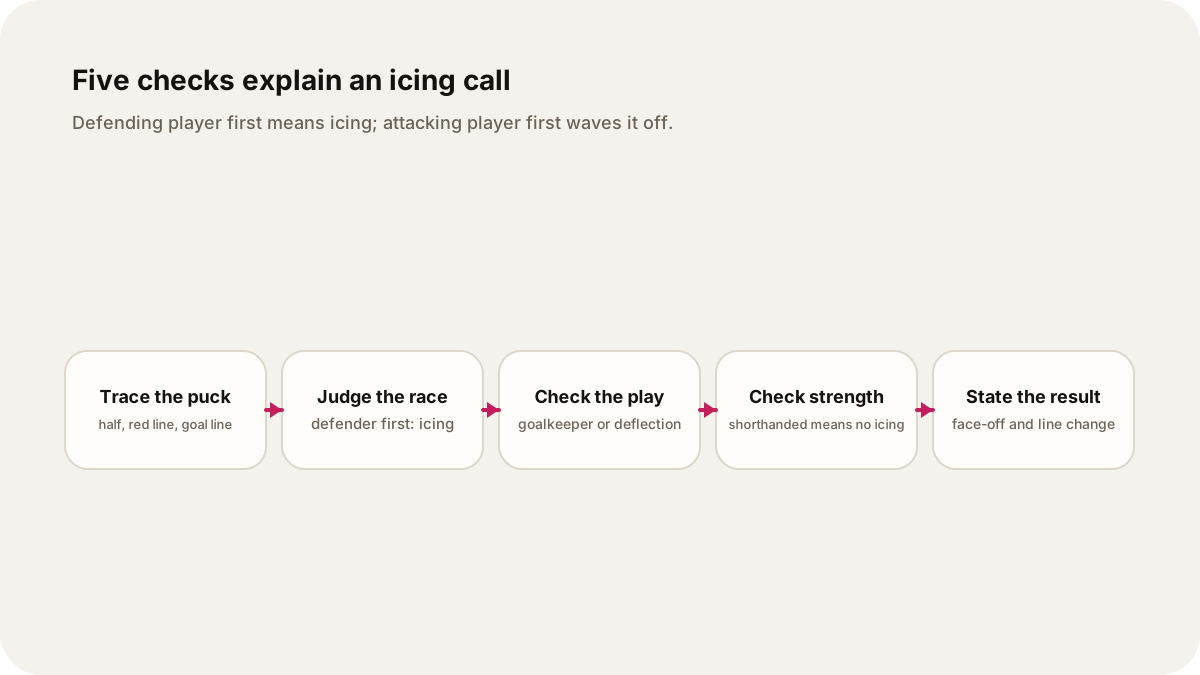
Icing is a long clear with a short decision: trace the puck, judge who would touch it first, then check the goalkeeper, deflection, numerical-strength, and competition-rule exceptions.
In ice hockey, icing means a team sends the puck from its own half of the ice beyond the opponent's goal line without a touch that changes the play. In the NHL, hybrid icing is a projected race to the puck. A linesperson is the official who judges that race. If the defending skater would get there first, the whistle stops play. If the attacking skater would get there first, play continues. The rule has important exceptions, especially for a team killing a penalty.
This guide uses “hockey” for ice hockey. It uses the 2026–27 National Hockey League rulebook for the NHL explanation. It compares that code with the International Ice Hockey Federation's 2026–27 rulebook. A local, school, junior, or recreational competition can adopt a different code. That competition's rulebook controls the call.
Key Takeaways
- Icing starts with a puck sent from the shooting team's half beyond the opponent's goal line, when the team is at equal or greater numerical strength.
- NHL hybrid icing is a race to who would touch the puck first, not simply a race to the face-off dots.
- A shorthanded team cannot be called for icing, and an icing call can restrict the offending team's line change.
The short rule: clear the puck, then check the race
The NHL divides the ice into halves at the centre red line. Numerical strength means the number of players each team has on the ice. A player on a team with equal or more players shoots, bats, or deflects the puck from that team's half beyond the opponent's goal line. If no opponent's touch, goal, or other exception cancels the play, the linesperson considers icing.
The puck does not need to enter the net. It can travel along the ice, around the boards, or through a deflection. The practical question is whether the puck will cross the goal line, outside the goal, and which skater would touch it first. The NHL rulebook says the determining factor is the projected first touch, not which player reaches the end-zone face-off dots first. The dots give the linesperson a useful deadline for making the decision.
That is why the whistle can come before anyone touches the puck. The officials are judging the developing play, not waiting for a collision at the boards.
What hybrid icing looks like in a real decision
For example, imagine a hypothetical NHL sequence. A defending centre receives the puck just inside their team's half during five-on-five play. Under pressure, the centre shoots it past the centre red line. The puck slides down the right boards and is headed toward the opponent's goal line. A forechecking winger is skating after it, while a defending winger is closer to the end-zone dots and would reach the puck first.
The linesperson calls icing because the defending player is projected to touch the puck first. That is the hybrid part of hybrid icing. Older descriptions that say “the first player to touch it decides the call” are too simple for the NHL procedure. The linesperson can stop the play once the race is clear.
Now change one detail. The attacking winger would get the first touch, while the defending winger is behind. The linesperson waves off icing before contact and play continues. The projected attacking touch means the forechecker has won the race. The same call would also be waved off if a listed exception applied.
The same example can be described aloud in a way that does not overload a listener: “The puck left the defending half, it was going to cross the goal line, and the defender would have touched it first. That is an icing call unless an exception applies.”
The exceptions that change the answer
Numerical strength comes first. A team is shorthanded when it has fewer players on the ice because of a penalty. A shorthanded team cannot be called for icing under the NHL rule. This is why a penalty-killing team can shoot the puck the length of the ice to relieve pressure. If a penalty is about to expire, identify the strength when the puck left the stick. Do not judge it from the later moment when the puck crossed the goal line.
An opponent's play can also change the result. If the puck rebounds from an opponent's body or stick in that opponent's half and then crosses the goal line, the play is not treated as a deliberate clear by the shooting team. A puck that enters the goal is a goal, not icing. A puck sent directly from a face-off has its own rule treatment. Include that face-off context in a careful replay explanation.
The goalkeeper is another important judgment. If the linesperson believes the goalkeeper feigns playing the puck, attempts to play it, or skates toward it, potential icing is waved off and play continues. A goalkeeper may be heading to the bench for an extra attacker. If that goalkeeper does not try to play the puck, the potential icing is not automatically cancelled. The official's observation matters here. A still image cannot establish the goalkeeper's intent.
NHL and IIHF: close wording, different details to check
The NHL and IIHF rules share the central structure. A puck sent from the team's half beyond the opponent's goal line can be icing, and a linesperson judges a race to the puck. A shorthanded team cannot be called for icing. An icing call affects the face-off and substitutions.
The competition label still matters. The NHL rulebook describes the face-off after icing as a choice of which end-zone dot, and it sets out NHL substitution restrictions. The IIHF 2026–27 rulebook also gives the attacking team the choice of end-zone face-off dot after icing and has its own wording for line changes, goalkeeper actions, numerical strength, and no-icing situations. Do not blend a sentence from one code into a broadcast of the other. Say “under NHL Rule 81” or “under IIHF Rule 81” before explaining a close call.
The safest comparison is procedural rather than visual. In either code, ask where the puck was shot, whether it crossed the red line and goal line, who would touch it first, whether a goalkeeper acted toward it, and whether the shooting team was shorthanded. Then check the edition and competition before stating the restart.
Turn one icing call into a source-linked audio guide
An audio explanation needs more than the phrase “they iced it.” Name the direction of attack, the centre red line, the goal line, and the players in the race. Then name the relevant exception. If a replay does not show numerical strength or the moment of a deflection, label that detail as unknown. Do not infer a penalty-kill exception from a jersey count that the recording cannot establish.
Prompt qualifier: “Explain this hypothetical NHL icing sequence using the 2026–27 Rule 81. State where the puck was released, whether it crosses the centre red line and goal line, which player would touch it first, and whether the team is shorthanded. Check the goalkeeper and deflection exceptions. Compare the corresponding IIHF rule only after naming the competition. Keep any missing replay detail unknown, and do not describe this as a real game.”
For another source-led sports explanation, see football offside: position and involvement, NBA shot-clock rules, and rugby union scoring. Each guide keeps the rule edition and the worked example beside the audio request. For source links and corrections in generated audio, see how to keep source links and corrections with an audio episode.
If you spot a source mistake in this guide, contact us. Our editorial standards explain how this Lissin guide uses original sources.
Sources
- NHL Official Rules 2026–27: Rule 81 on icing, the hybrid race, goalkeeper actions, face-off location, numerical strength, and line changes.
- NHL Video Rulebook: official NHL explanations of icing and the race to the puck.
- IIHF Official Rule Book 2026–27: Rule 81 and the international competition's icing wording.
- IIHF Rules and Regulations: current edition page identifying the 2026–27 rulebook.