
NBA shot clock: when it resets to 24 or 14 seconds
In the NBA, 24 seconds usually follows a new possession, while 14 seconds belongs to a qualifying rim-contact sequence. Frontcourt fouls can preserve more than 14.
If an NBA broadcast says “the clock goes to 14,” the useful follow-up question is: what happened immediately before the whistle or rebound? The answer is not simply “the offense got the ball back.” NBA Rule 7 separates a new possession, a missed attempt that touched the rim, a defensive foul, and an ordinary out-of-bounds play. Those details determine whether the next count is 24, 14, the previous time, or only the unexpired time.
This guide uses the NBA’s live Rule 7 page, checked on October 7, 2026. The linked 2025–26 rulebook is an earlier-season reference. It is about NBA basketball only. FIBA, NCAA, WNBA, G League, local-league, and tournament rules can use different procedures.
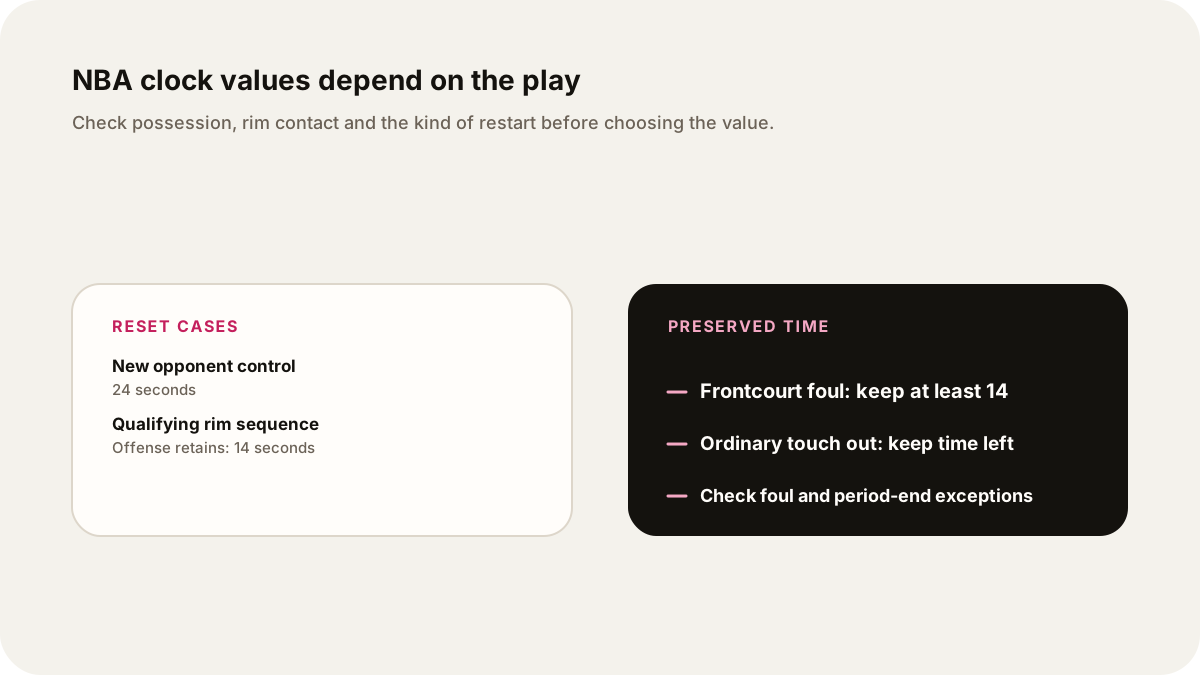
Key takeaway: A fresh change of possession normally starts at 24 seconds. A qualifying offensive rebound sequence starts at 14. A frontcourt defensive foul generally keeps the existing time or moves it up to 14, whichever is greater. An ordinary defensive touch before the ball goes out of bounds leaves the offense with the unexpired time.
What the 24-second clock measures
The shot clock is the time for the team in possession to attempt a field goal. The NBA starts it at 24 seconds when a team gains a new possession. After a throw-in, it starts when a player legally touches the ball on court. The ball must leave the shooter’s hand before the clock expires. On a missed attempt, rim contact matters for the reset; a successful basket still counts under the rule’s timing conditions. NBA Rule 7, Sections I and II sets out those starting and stopping rules.
Team possession ends when the ball hits the offensive team’s rim or the opponent gains possession. A defender who merely bats the ball without gaining control does not end possession, so the clock continues. That distinction matters in a scramble: a deflection is not automatically a new 24-second possession.
For audio, name the event that changed the state. “The defender touched it” is incomplete. “The defender touched it, but never controlled it, so the same possession and clock continued” gives the listener the rule’s consequence.
When the clock resets to 24
The NBA resets to 24 seconds for a change of possession from one team to the other. It also uses 24 for several backcourt restarts, including a personal foul or violation when the ball will be inbounded in the backcourt. Certain jump balls, flagrant fouls, and punching fouls also appear in the 24-second list in Rule 7, Section IV(c).
This is why a steal usually produces a fresh 24. The opponent gained possession, so the old count ended. The same result follows when a defensive rebound establishes new control. The clock does not become 24 merely because the defense touched a pass or knocked it loose for a moment.
The NBA has a period-end timing exception. If 24 seconds or less remain in the period, the shot clock does not function after a change of possession. The official NBA rulebook says it can be reactivated and reset to 14 seconds when a qualifying Section IV(d) situation occurs. In a close game, the game clock and shot clock therefore cannot be read as two independent full countdowns.
When it resets to 14
The 14-second reset applies to a specific rim-contact sequence. The offensive team must first gain possession after either an unsuccessful free throw that remains in play or an unsuccessful field-goal attempt that contacts the basket ring. The same 14-second treatment can apply when the ball goes out of bounds immediately after that attempt and the offense retains possession, or when a defensive loose-ball foul occurs in that sequence and the frontcourt is the inbound location.
The rule’s wording also covers a live ball from the playing court that contacts the basket ring of the team in possession. That keeps the rule from depending on whether a shot looked like a conventional attempt. The rim contact and the immediate possession sequence are the important facts. Rule 7, Section IV(d) is the primary reference.
An offensive rebound after a missed three-pointer is the familiar example. The shot hits the rim, the offense recovers, and the clock displays 14. A missed free throw can lead to the same result if it remains live and the offense is first to gain possession.
The reset is not a reward for every offensive rebound. If the ball never touched the rim, Rule 7 lists the field-goal attempt among situations where the shot clock is never reset. If the defense gains possession first, it is a change of possession and the new team gets 24, subject to the period-end exception.
Why the answer can be more than 14 after a foul
Suppose the offense has 18 seconds when a defender commits a personal foul in the frontcourt. The NBA generally keeps the clock at 18, because the rule says the clock remains the same as when play was interrupted or resets to 14, whichever is greater. It does not force every frontcourt defensive foul down to 14.
If the offense has 9 seconds in that same kind of situation, the clock rises to 14. The phrase “same or 14, whichever is greater” is the part an audio explanation should say aloud. A defensive three-second violation, some defensive technical or delay-of-game situations, and a defensive kicked or punched ball with a frontcourt throw-in use that same comparison in Rule 7, Section IV(e).
There is an important exception inside the foul rules. If a loose-ball foul happens immediately after a qualifying missed shot or free throw, and the offense will inbound in the frontcourt, the 14-second rule can apply. If the defensive foul sends the inbound to the backcourt, Rule 7’s 24-second backcourt provision applies instead. The court location changes the result.
Out of bounds: read the clock before the ball left
An ordinary out-of-bounds play does not automatically become 14. If the defender is the last player to touch the ball before it goes out, the offense gets the ball with only the unexpired time remaining. If the display showed 21, the next possession can begin with 21. If it showed 3, the offense has 3. If it showed 0, the shot-clock violation has already occurred even if the horn has not sounded.
When the out-of-bounds play follows a missed free throw or missed field goal that touched the rim, and the offense retains possession, the qualifying sequence can produce 14. That is why a replay explanation should establish the previous shot before naming the reset.
Consider a hypothetical play. The home team misses a layup, and the ball hits the rim. A defender tips the rebound out of bounds without controlling it. The home team is awarded the frontcourt throw-in. Because the ball touched the ring and the offense retains possession in that immediate sequence, the clock goes to 14. Now change one fact: the offense had 18 seconds when a defender simply deflects a pass out of bounds during an ordinary possession. The offense keeps 18, not 14. These are different rule paths even though both end with an offensive throw-in.
A compact NBA decision path
For a replay or an audio recap, use this order:
- Did the opponent gain possession? If yes, start a new possession at 24, unless the period-end exception suspends the clock.
- Did the ball hit the offensive rim, and did the offense immediately regain it after a missed field goal or free throw? If yes, check the 14-second rule.
- Is the restart caused by a defensive foul or violation? Identify frontcourt or backcourt. Keep the same time or use 14 in the frontcourt when that rule applies; use 24 for the listed backcourt cases.
- Did the ball go out of bounds after a defender’s touch without a qualifying rim-contact sequence? Give the offense the unexpired time.
- Did the ball fail to touch the rim and reach zero? Treat it as a shot-clock violation, even if the display or horn is disputed.
For example, an accurate request to turn a play into a Lissin audio guide would be: “Use the current NBA Rule 7. State who last controlled the ball, whether the shot touched the rim, where the inbound occurs, and the clock value immediately before the stoppage. Then explain why the next display is 24, 14, the previous value, or the unexpired value. Label any missing replay detail instead of guessing.”
For another source-led sports explanation, see the football offside guide. If the episode includes a score or a diagram, the chart explanation guide shows why the spoken version should name each relevant quantity. Keep the official rule link beside the audio so a listener can check a correction.
Sources
- NBA Rule No. 7: Shot Clock: official definitions, starting rules, 24-second resets, 14-second sequences, out-of-bounds treatment, and the period-end exception.
- 2025–26 Official NBA Playing Rules: earlier-season rulebook PDF, including Rule 7; use the live NBA page for current rules.
- NBA Rule No. 12: Fouls and Penalties: frontcourt and backcourt foul timing references.